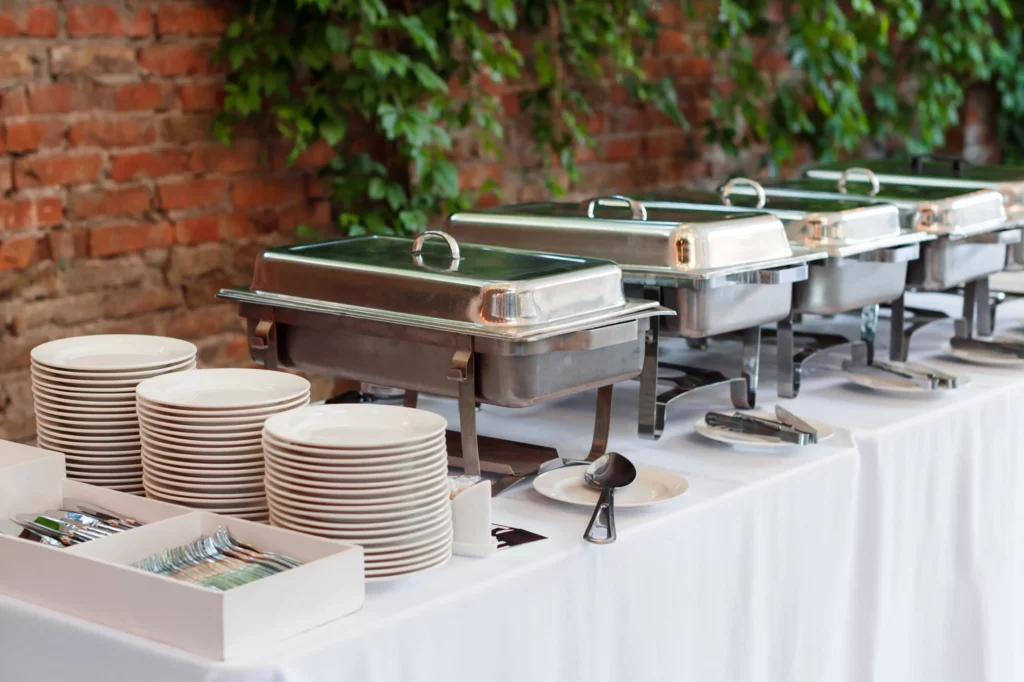
Caterers are always on the move, from prepping food to taking it to the venue and setting up service on-site. Your gear is a crucial part of your operation, helping you keep food safe, stay organized, and run the same smooth setup again and again.
So, when you choose equipment for your catering business, you need it to be durable, practical, and cost-effective.
We’ve put together a free checklist of the essentials for a successful, repeatable event setup, plus tips for protecting the gear you rely on every time it leaves your kitchen.
The To-Go Version:
Catering equipment is the gear you use to prep food, transport and serve it at venues, and clean up afterwards. It includes cookware essentials, spill-proof hot and cold storage, and tools for service and setup (if you’re staying on-site).
Your gear is your livelihood and the biggest investment in your business. Learn how to protect your gear with equipment and catering insurance from Food Liability Insurance Program (FLIP).
Quick Look: Essential Equipment for a Catering Business
Before we dig into the details, here’s a preview of what kind of equipment you need to start a catering business.
Swipe →
| Catering Service | What You Need To Start | What You Can Add Later |
|---|---|---|
|
Drop-off catering (food prep + transport + disposable setup) |
✔️ Insulated food carriers or hot boxes ✔️ Coolers and ice ✔️ Instant-read thermometers ✔️ Leak-proof containers ✔️ Plastic serving utensils ✔️ Disposable serving platters and aluminum trays ✔️ Wire chafing dishes with fuel (for buffet dining ✔️ Disposable food containers (boxed lunch style) ✔️ Totes with lids ✔️ Rolling cart or dolly |
➕ Non-slip mats for transport ➕ Extra pans and lids ➕ Beverage dispensers |
|
Full-service catering (food prep + transport + setup / service + cleanup) |
Drop-off essentials plus: ✔️ Chafing dishes, chafer fuel, and a long lighter ✔️ Hotel or catering pans with lids ✔️ Dinnerware, flatware, and glasses ✔️ Menu cards or food labels ✔️ 2+ bus bins ✔️ Disinfectant spray ✔️ Paper towel ✔️ Disposable gloves (food-safe and cleaning) ✔️ Server aprons ✔️ Beverage dispensers |
➕ More chafers ➕ Duplicate serving utensil sets ➕ Tablecloths and decor pieces ➕ Food label stands ➕ Risers and stands ➕ Portable bar ➕ Extra buffet table |
|
On-site cooking/finishing (food prep + transport + setup / service + cleanup) |
Full-service essentials plus: ✔️ Induction cooktop or hot plate ✔️ Extension cord and power strip ✔️ Heat-safe gloves ✔️ Probe thermometer ✔️ 1 saucepan + 1 sauté pan (or similar multipurpose set) |
➕ Additional cooktops ➕ Warming plates ➕ Heat lamps ➕ Extra pans or tools for action stations |
Catering Equipment Checklist (What You Need & Why)
When you’re choosing equipment for a catering business, treat it like a tried-and-true recipe: start with the core ingredients that work every time, then adjust them once you’ve run a few events. Nail the basics first, and you’ll know exactly what’s worth adding or upgrading.
Cooking & Food Prep
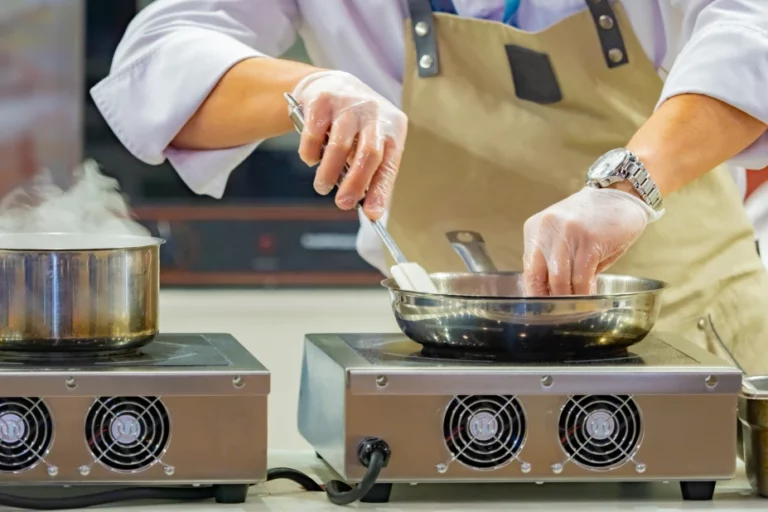
The items on your menu and where you’ll finish cooking determine what food prep gear you need. Some of these are basics you might already have, like stock pots, frying pans, and measuring cups. You’ll also need:
- Cutting boards: Color-coded food prep surfaces to prevent cross-contamination
- Professional-grade knives: A chef’s knife and a paring knife cover most slicing and trimming
- Kitchen scale: For serving consistent portions at volume
- Mixing bowls with lids: Ideal for mixing, staging, and transporting prepared food
- Disposable sheet pans: Easier to transport and saves time during cleanup
- Cooking utensils: Includes spatulas, whisks, tongs, ladles, etc.
- Colander: For rinsing produce or draining pasta water
- Can opener: A commonly forgotten kitchen essential, especially for larger cans
- Kitchen shears: Opt for stainless steel options for precise cutting and easy cleaning
If you’ll finish cooking at the venue or have a chef action station, consider:
- Induction cooker or hot plate: Portable electric cooktop for quick finishing and on-site cooking
- Extension cord and power strip: Power is often limited, especially at outdoor venues
- Heat-safe gloves: For safe handling of hot pans and cookware
- Instant-read thermometers: Useful for performing quick checks during finishing
Pro Tip: Start with the cookware that’s required to make your top three dishes. If a utensil or food prep tool doesn’t support those, it can wait.
Hot/Cold Holding & Food Transport
When you’re cooking away from the venue, you need a reliable, organized way to transport hot or cold food while keeping it at safe temperatures. Aside from maintaining safe temps, sturdiness is essential when one bump in the road can cause spilled sauces, smashed pastries, and shattered glass.
Safely transport your carefully prepared dishes with:
- Catering vehicle: Must fit your carriers and carts, secure gear from tipping, and have the right commercial auto insurance when being used for business
- Insulated food carriers: Cambros are useful for keeping food hot, but can also be packed with ice to keep food cold
- Hotel steam table pans (with lids): Stack easily and move from transport to service
- Leak-proof containers: Safer for sauces, dressings, and other liquids
- Instant-read thermometer: Quick temp checks when you arrive and before serving
- Probe thermometer: More accurate for deep trays and large cuts of meat
- Glass racks: Prevents breakage by holding glassware in place
- Lidded totes: Keep items grouped and packing repeatable
- Non-slip mats: Stop pans and containers from sliding around in your vehicle
Serving Equipment
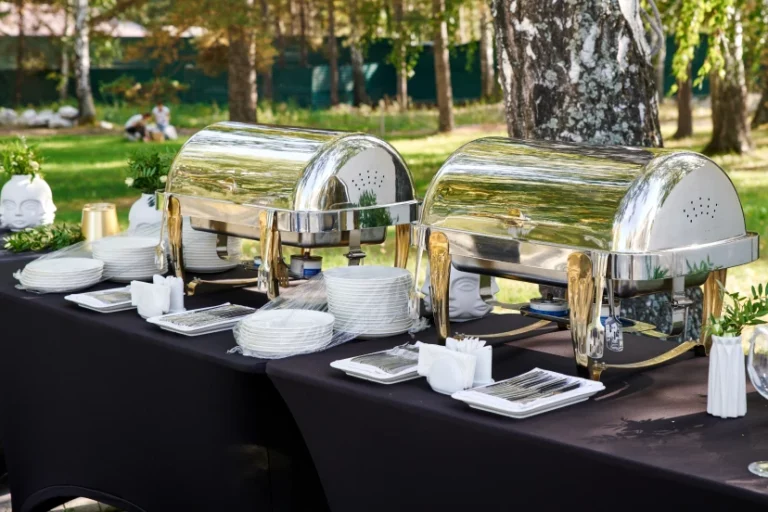
One of the most common causes of foodborne illness from catered events is when food is left out too long at unsafe temperatures. Once you’re on-site, your next job is to start serving guests smoothly while maintaining the quality of your food. You’ll need:
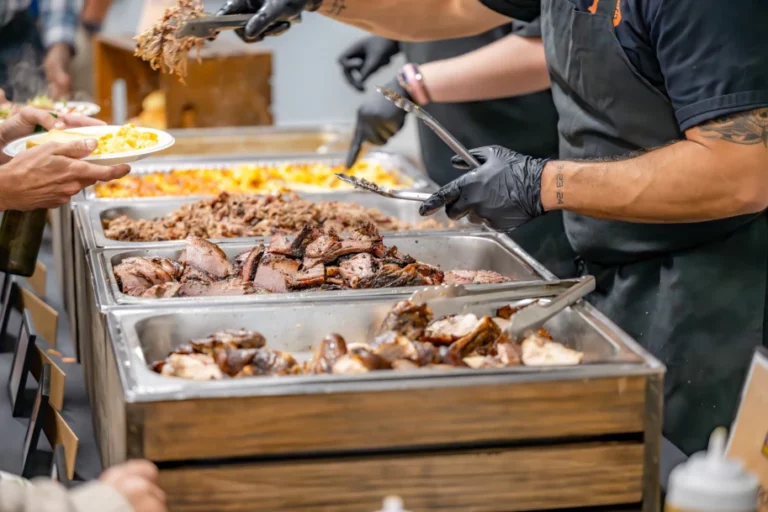
- Chafing dishes: Keep buffet food hot throughout service with disposable aluminum and wire varieties or stainless steel
- Chafer fuel: Powers chafers when you don’t have electric warmers
- Long lighter or matches: Safer way to light chafer fuel without the risk of getting burned
- Serving platters: Plastic catering trays and lids are easy to stack for transport, stage for service, and toss when finished
- Serving spoons, tongs, and ladles: Keeps the line moving with cleaner portioning and prevents cross-use between dishes
- Carving knife and fork: Useful for roasts, brisket, turkey, and ham
- Food-safe disposable gloves: For sanitary food handling during service
- Server aprons: Creates a clean, presentable look for servers and chefs finishing dishes on-site
- Insulated beverage dispensers: Coffee urns and airpots keep drinks hot while plastic or glass dispensers with plenty of ice keep drinks cold
- Menu cards and labels: Reduces questions and helps guests choose, especially if they have dietary restrictions or allergies
Pro Tip: If a guest gets sick or has an allergic reaction to your food, you could be held responsible. Product liability insurance, included in your base catering insurance policy, can cover medical bills and legal costs if you’re sued over claims like food poisoning.
Table & Dinnerware
Dinnerware is where good presentation and service meet. Your choice in options should reflect the venue, like opting for disposables in casual, outdoor settings or choosing china or porcelain for formal occasions. Always bring extras so you don’t run short.
- Plates and bowls: Choose a variety to match your menu and service style, such as salad plates, dinner plates, dessert plates, etc.
- Flatware: Bring extra forks, spoons, and knives
- Disposable napkins: Cloth napkins look great, but guests will use more than you expect, so offer disposables, too
- Glasses: Match your drink options (e.g., water glasses, wine glasses, or champagne flutes)
- Coffee cups: Choose between stackable porcelain or disposable cups with lids
- Carafes or caddies: Compliments coffee stations with creamer and sugar
- Straws/stirrers: Necessary for coffee, optional for water and cold beverages
- Salt and pepper shakers: Large events may require a set for every table
- Bread baskets: Include a cloth to wrap the bread and keep it warm
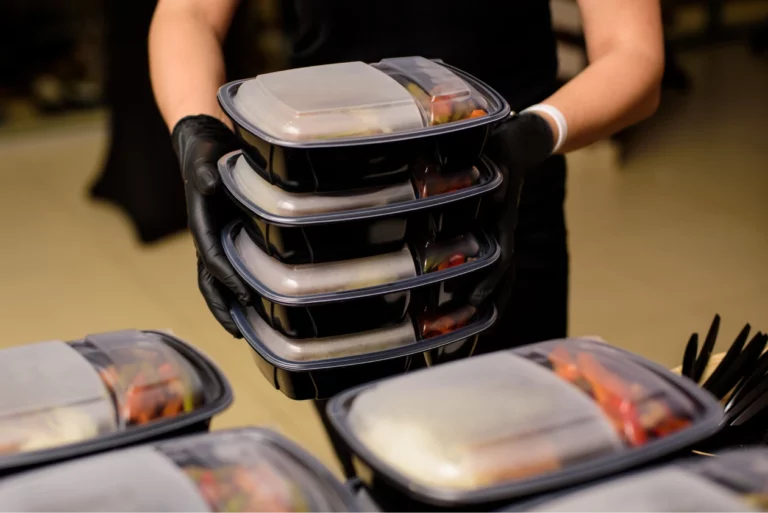
- Takeout carriers (optional): Provides convenience for dinner guests if you have leftovers and they’re ideal for boxed-lunch style meals
🍸 Will your catering services include alcohol? If so, you may need additional bar tools and service items, such as a portable bar, shakers, jiggers, and strainers, along with proof of liquor liability insurance.
Venue Setup & Presentation
Some caterers offer full decor rentals, but most small catering businesses don’t need that overhead. Your goal is to make your setup look clean, organized, and easy to navigate. A few basic pieces can elevate your presentation without blowing your budget.
- Tablecloths, skirts, or runners: Makes the setup look clean and intentional
- Label stands: Keeps labels visible and readable, even on busy buffet lines
- Risers or stands: Adds height and saves table space, especially on smaller tables
- Tablecloth weights or clips: Keeps linens in place outdoors or in high-traffic areas
- Table numbers: Useful for plated service, staff coordination, and cleanup tracking
Cleanup
Cleanup is part of the job, not an afterthought. Leaving a venue in good shape protects your reputation, helps you get rehired, and makes load-out faster. Keep these essentials packed together and easy to grab throughout the event:
- Trash cans with lids: Some venues and private events don’t have enough, especially near the service line
- Extra trash bags: Outdoor and buffet-style events often require extras
- Bus bins (2+): Clean up plates and flatware quickly so it’s ready for washing on-site or back at your kitchen
- Disinfectant spray and wipes: For wiping down tables, service stations, and counters
- Paper towels: Fast cleanup for spills and greasy messes
- Disposable gloves: For cleaning tasks only (separate from food gloves)
- Hand sanitizer: Some events may not have easy or nearby sink access for handwashing
Catering Software & Business Tools
The right business catering equipment ensures smooth service outside of events, too. Having a reliable way to manage food supplies for catering, take payments, and handle client inquiries sets you up for success as you grow. You’ll want to consider:
- Catering management software: Handle event bookings, schedule deliveries, and speak directly with clients through platforms like CaterZen or HoneyBook
- Point-of-sale (POS) and inventory tracking: Clover is a POS system focussed on small food businesses that can generate invoices, take online payments, and manage inventory
- Catering business insurance: FLIP’s catering insurance helps you meet venue requirements and can cover the cost of unexpected accidents
- Simple checklist system: Use a repeatable load-out list, like FLIP’s catering equipment checklist, so nothing important gets left behind
Why Caterers Need Insurance to Protect Their Equipment
Your gear is your livelihood. It’s how you show up, serve, and get paid. And because off-site catering means constant loading, transport, unloading, and setup, your gear gets handled a lot. If a key piece is stolen or damaged, replacing it can wipe out profits from multiple events and slow down your bookings.
That’s why insurance for catering equipment is so important for professional caterers. Tools and equipment coverage (also called inland marine insurance) can help cover the cost to repair or replace equipment that’s stolen or damaged when it’s moved, used off-site, or in temporary storage. For example:
- A portable grill is stolen from your catering van during load-in
- Your utility cart tips over in the parking lot and damages your chafing dishes
- A guest accidentally snaps the spigot off your beverage dispenser during service
- Your vehicle is rear-ended on the way to an event, damaging the contents of your insulated carriers
With a catering insurance policy from FLIP, you can add tools and equipment protection for as little as $11.17 per month. With fewer setbacks and faster replacement, you can keep booking events with confidence instead of scrambling to replace gear at the last minute.
Final Tips on Buying Equipment For a Catering Business
Buying equipment is one of the biggest upfront costs when starting a catering business, and it’s easy to overspend. The smartest move is to build a setup you can repeat for most events, then upgrade once you’ve gained more experience.
Use these four tips to help stretch your budget, avoid common buying mistakes, and make your gear easier to pack, use, and track.
#1. If You’re Buying Used, Always Test Before Service
Buying used catering equipment from Facebook Marketplace, local restaurant supply stores, and online auctions can save you as much as half off the original price. For electric or heated equipment, like induction cookers or hot boxes, test it under load before event day to ensure it maintains heat.
#2. Budget Now, Finance When You Have Steady Bookings
A carefully planned budget and an equipment list that sticks to the essentials keep you from wasting cash on items you don’t need. When you’re ready to scale your business, you might consider financing future equipment purchases, like buffet tables, holding cabinets, or countertop food warmers, with a small business loan.
#3. Standardize Pan and Lid Sizes Early
Pick one or two food pan sizes and stick to them. Matching pans, lids, and carriers makes packing faster. Knowing how many people a single pan feeds also helps you plan how much food to make for future events based on their guest count.
#4. Use Your Checklist for Setting Up & Packing Out
Arriving at a venue and realizing you forgot to pack an important piece of equipment is not a good feeling. Neither is leaving the venue and not realizing you’re missing that tool until it’s time for your next event. After you’ve bought all your equipment and built a packing list, use that checklist after each event to make sure there’s nothing left behind.
Booked a catering job? Download our free catering equipment checklist to plan what you’ll need for this event and stay organized for the ones that follow.
Common Questions About Catering Equipment & Insurance
What Are The Must-Have Catering Equipment Items to Start?
To start a catering business that mostly does off-site events, you need equipment for prep, safe transport, serving, and cleanup. The must-haves include:
- Cooking essentials: Includes cutting boards, knives, sheet pans, mixing bowls, and on-site cooking equipment like induction cooktops
- Transport and storage: Insulated food carriers, hot boxes, and coolers for hot/cold holding as well as steam table pans and lids, thermometers, lidded totes, and rolling carts
- Serving tools: Chafing dishes and fuel, lighter, serving utensils, serving platters or trays, food-safe disposable gloves, and food labels
- Dinnerware: Plates, bowls, flatware, glasses, coffee cups, and extra napkins
- Cleanup: Trash bins, garbage bags, bus bins, disinfectant spray or wipes, paper towels, and hand sanitizer
Do I Need Different Equipment for Drop-Off vs Full-Service Catering?
Yes. Drop-off catering requires transport equipment and disposable dinnerware, since guests serve themselves and you leave after setup. Full-service catering involves more equipment for on-site service, including extra utensils, bussing tubs, higher-end dinnerware, and portable gear for finishing food on-site.
How Do Caterers Keep Food Hot or Cold While Taking It to Events?
Caterers use insulated food carriers like hot boxes or Cambros for hot items and coolers or insulated cold carriers with ice for cold items. Food is typically packed in steam table pans with lids to prevent spills and help hold temperature, then checked with instant-read thermometers when arriving and before serving.
Does Insurance Cover Catering Equipment When It’s Off-Site or in a Vehicle?
Yes. Inland marine insurance, or tools and equipment protection, from FLIP is designed to cover the cost to repair or replace catering equipment if it’s stolen or damaged while it’s being moved, used off-site, or in temporary storage.

Katie Monsewicz
Ohio-based copywriter and licensed insurance agent, Katie Monsewicz leverages her experience working in the food industry with her writing skills to help entrepreneurs achieve their business goals. She holds a bachelor's degree in journalism from Kent State University. Before working for FLIP, she wrote for multiple home, health, and retail brands and currently helps run her family’s century-old bakery business. Read Katie’s full bio.
Ohio-based copywriter and licensed insurance agent, Katie Monsewicz leverages her experience working in the food industry with her writing skills to help entrepreneurs achieve their business goals. She holds a bachelor's degree in journalism from Kent State University. Before working for FLIP, she wrote for multiple home, health, and retail brands and currently helps run her family’s century-old bakery business. Read Katie’s full bio.