Catering Statistics for 2026: Industry Trends, Data, and Insights
From large corporate gatherings to small, intimate weddings, caterers play an essential role in making any event enjoyable with delectable food and drinks.
We surveyed our catering policyholders to get the inside scoop on which events they’re servicing, what’s on their menu, what technology they’re using to manage their business, and more.
Bite-Sized Takeaways
51% of respondents said their catering business grew in 2025
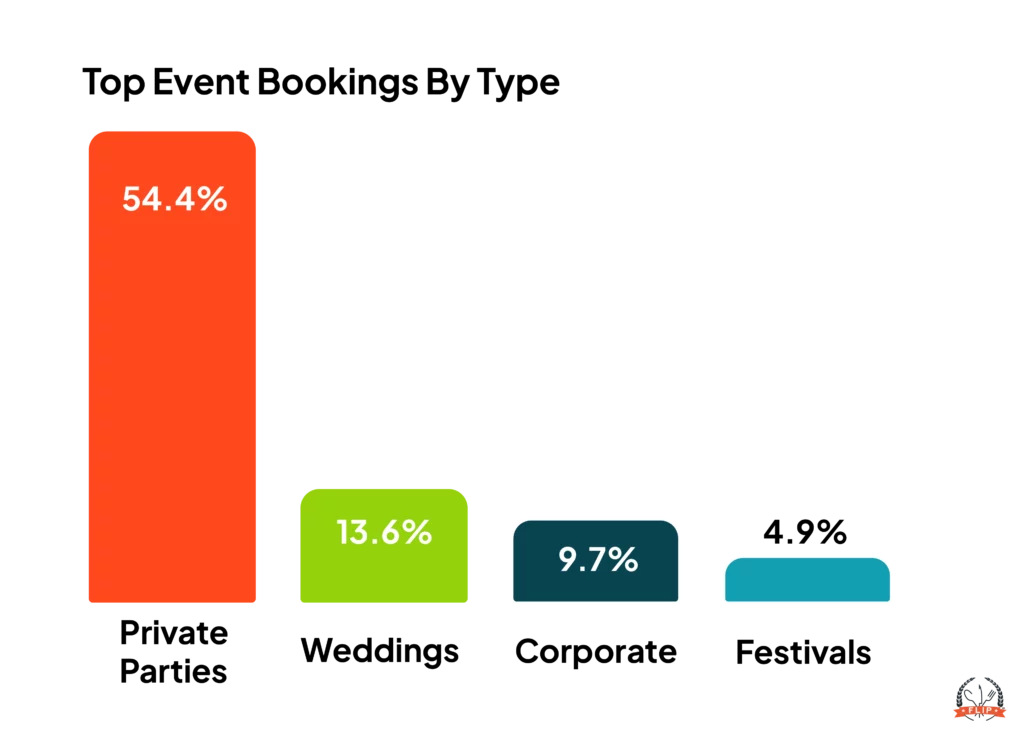
Private parties are the most popular type of event that catering businesses service, according to 54.4% of policyholders surveyed
Catering business owners ranked price as the number one factor customers care about when choosing a catering service
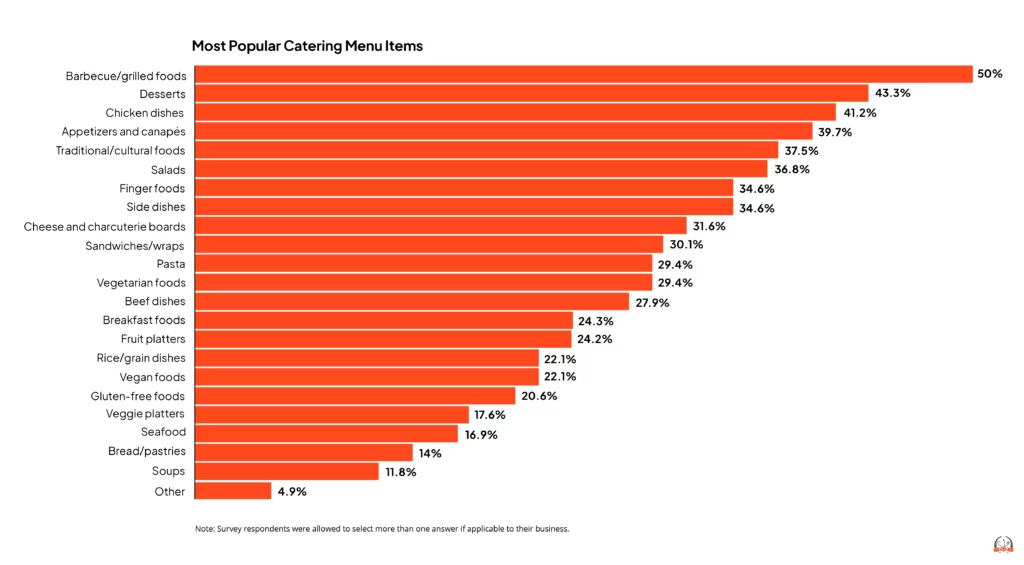
50% of catering business owners surveyed say barbecue/grilled food is the most requested menu item
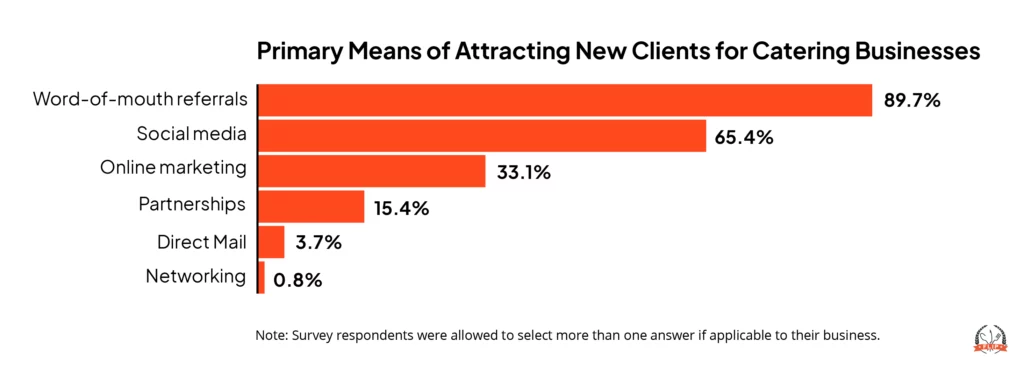
Word-of-mouth referrals are the most common marketing tactic for our respondents, with 89.7% of respondents listing it as their primary method for attracting new clientele
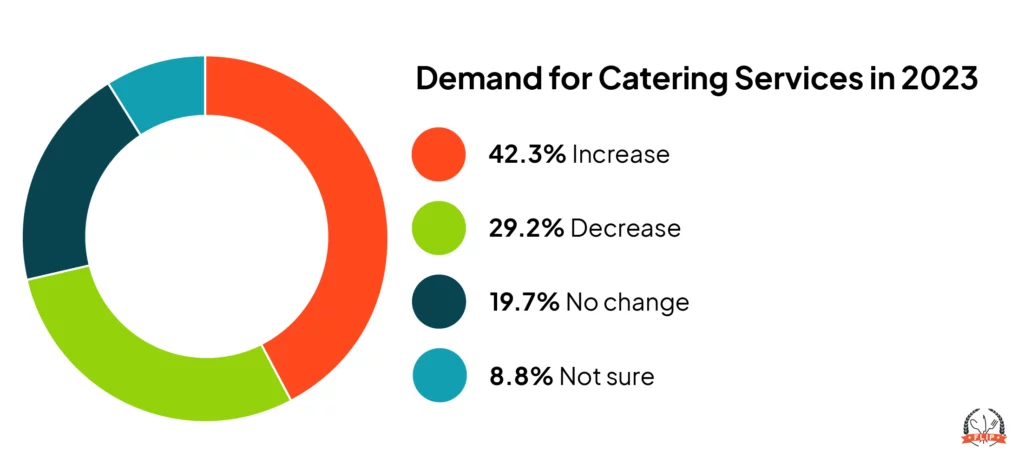
Just over half (51%) of our catering policyholders reported growth in 2025, while 29.4% said their business performed the same as it did the previous year.
These results may have contributed to an overall optimistic outlook, as 48.5% of caterers plan to expand their operations in 2026. 40% of those anticipate a profit margin greater than 10%.
Challenges
Despite an overall optimistic outlook, 60.2% of the caterers we surveyed cited rising costs as their biggest challenge in 2026. Other notable challenges include:
Inflation/customer price sensitivity (53.4%)
Marketing and customer acquisition (51.5%)
Staffing/labor shortages (32%)
Of those surveyed, 82% expect ingredient costs to continue to rise throughout 2026, with 55% anticipating labor costs to increase as well.
Types of Catering Businesses
Private parties are the most popular type of event for catering businesses, with 54.4% of survey respondents selecting this category.
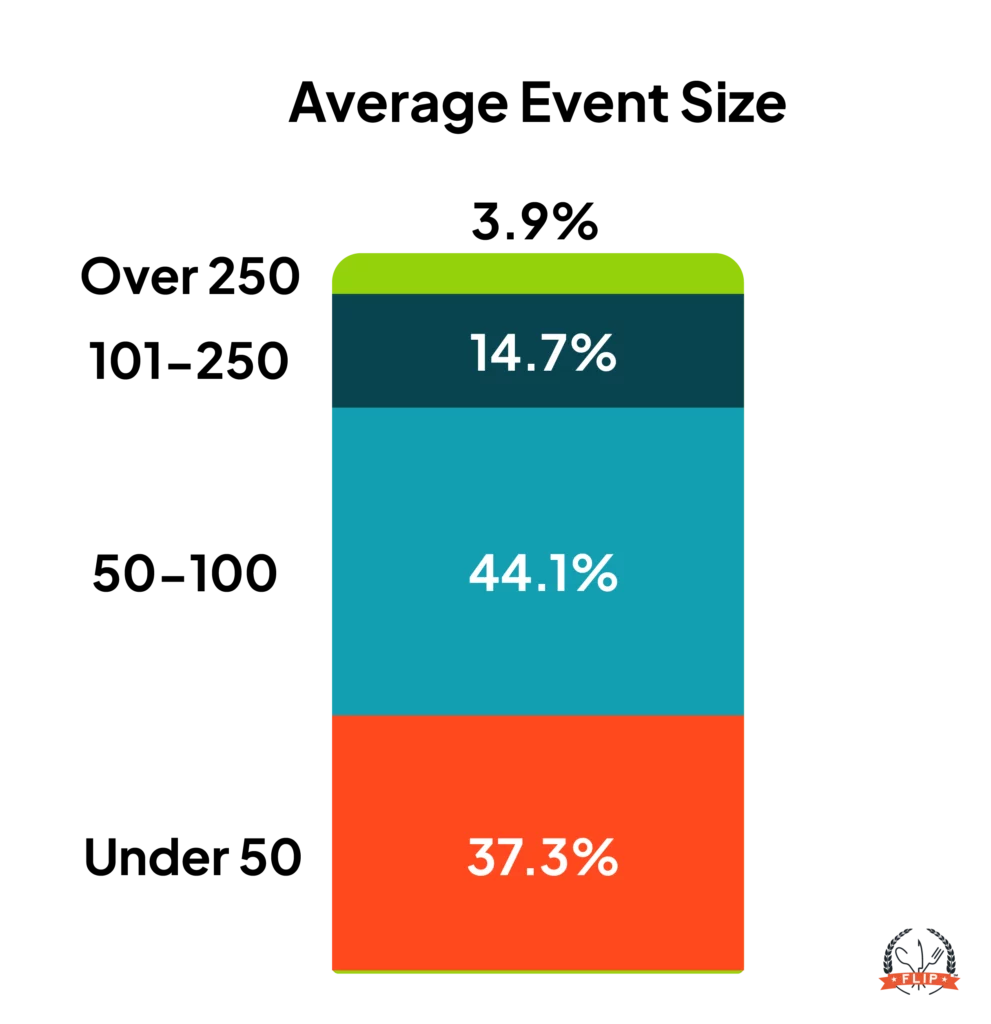
As for event size, most catering businesses (44.1%) said their average guest count is 51–100 guests.
While our respondents tend to cater events with headcounts under 250, 3.9% typically exceed that size.
Average Catering Business Income
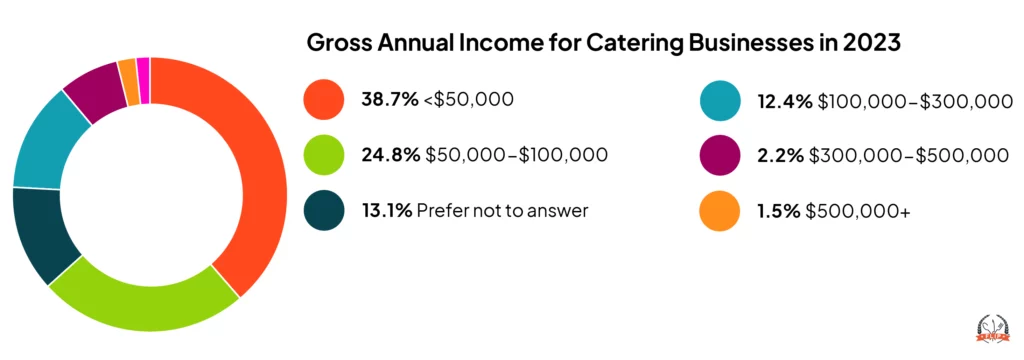
In 2023, 38.7% of catering business owners reported earning up to $50,000 in annual gross income.
A combined 3.7% of respondents made above $300,000 in gross annual income, while 7.3% reported no income for undisclosed reasons.
Most Popular Software for Catering Businesses
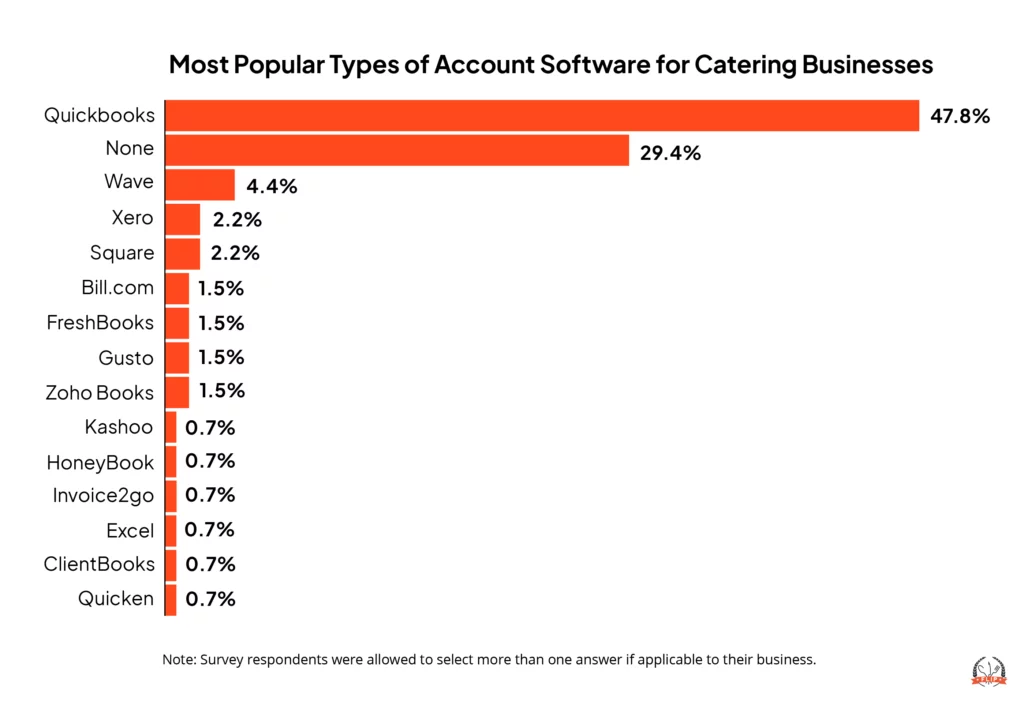
According to FLIP catering insurance policyholders, QuickBooks is the accounting software of choice. A whopping 47.8% of respondents reported using QuickBooks to manage their business finances.
4.4% use Wave
2.2% use Xero
2.2% use Square
However, 29.4% of respondents say they do not use any accounting software for their business. 4.9% specify that they place their finance management in the hands of professional accountants instead.
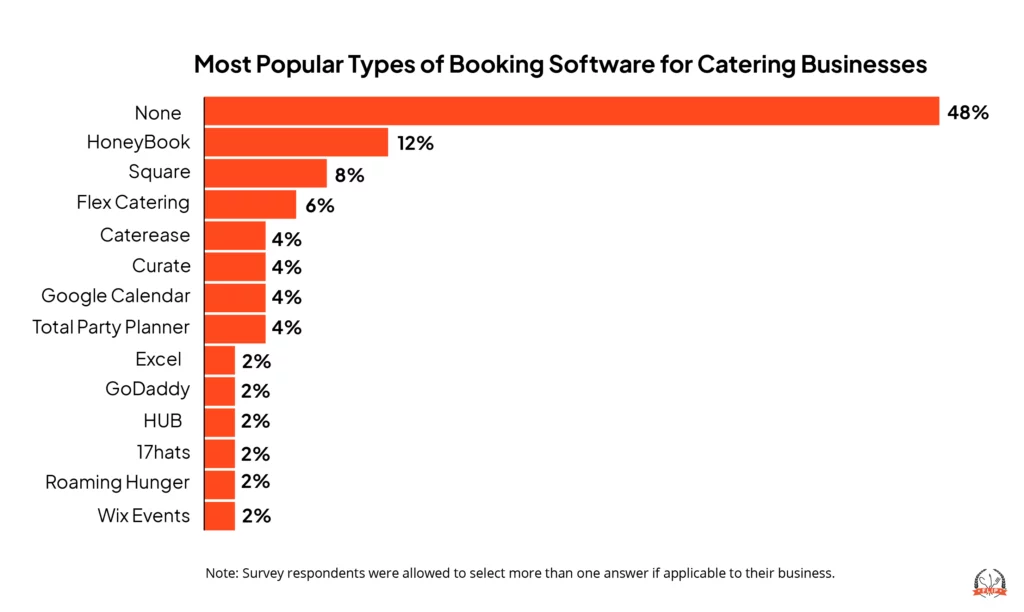
As for booking software preferences, catering businesses are pretty split. 48% of our respondents said they don’t use any type of booking software to get gigs. Of those that do, 12% use HoneyBook.
8% use Square
6% use Flex Catering
Some catering businesses allow clients to book services directly through their websites. For business owners who built their own websites, 21.2% used GoDaddy, followed closely by Wix (20.4%).
10.6% use Shopify
10.6% use Squarespace
10.6% use WordPress
9.7% use Square Online
While most of our survey respondents have websites for their catering businesses, 6.3% do not. Of those who do not have a website, 2.7% reported using Facebook as their primary business hub instead.
The most popular website builders for catering businesses are GoDaddy and Wix, with 21.2% and 20.4% of survey respondents using them to create their sites, respectively.
Legal Requirements for Catering Businesses
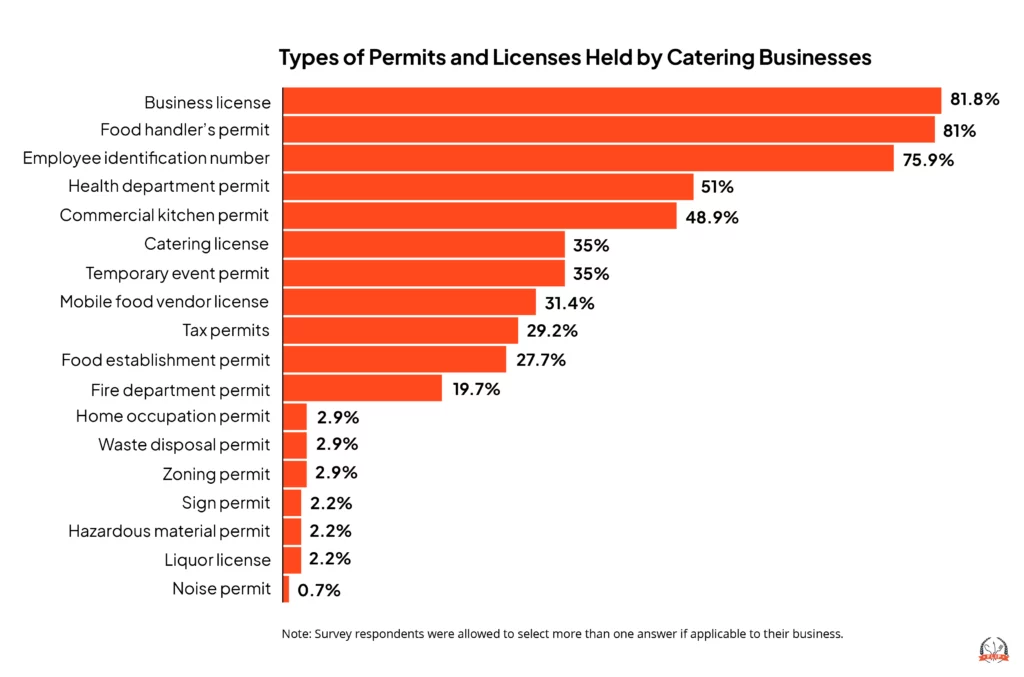
One of the most crucial parts of starting a catering business is acquiring all necessary licenses and permits. Even though the exact requirements vary depending on where you live, there are some permits and licenses that are almost universally required.
A business license and a food handler’s permit are the most popular legal requirements for catering businesses — 81.8% and 81% of survey respondents stated they have these documents, respectively.
As of 2024, the menu item our caterers say their clients can’t get enough of is barbecue. 50% of our survey respondents say their clients request grilled foods to be served at their events.
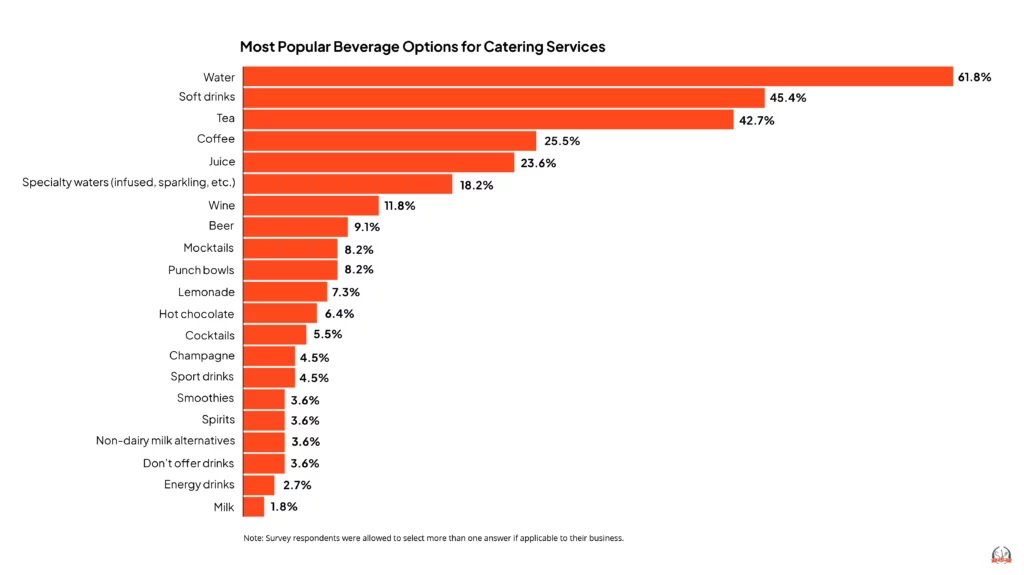
As for beverage options, water (61.8%), soft drinks (45.4%), and tea (42.7%) top the list.
Notably, our respondents reported that their clients request mocktails (8.2%) more often than cocktails (5.5%). This echoes a larger trend towards non-alcoholic beverages in recent years.
If you include alcoholic beverages in your catering services, make sure you have liquor liability insurance to shield you from the financial impact of alcohol-related claims.
Catering Customer Insights
Consumer Priorities
According to a survey conducted in 2025, most catering business owners ranked price as the biggest priority for clients based on their interactions with them.
Other priorities include (in order of ranked importance):
Food quality
Company reputation and reviews
Menu flexibility
Presentation
Successful Marketing Tactics
Word-of-mouth marketing referrals are the primary means for attracting new clients for 89.7% of our catering insurance policyholders.
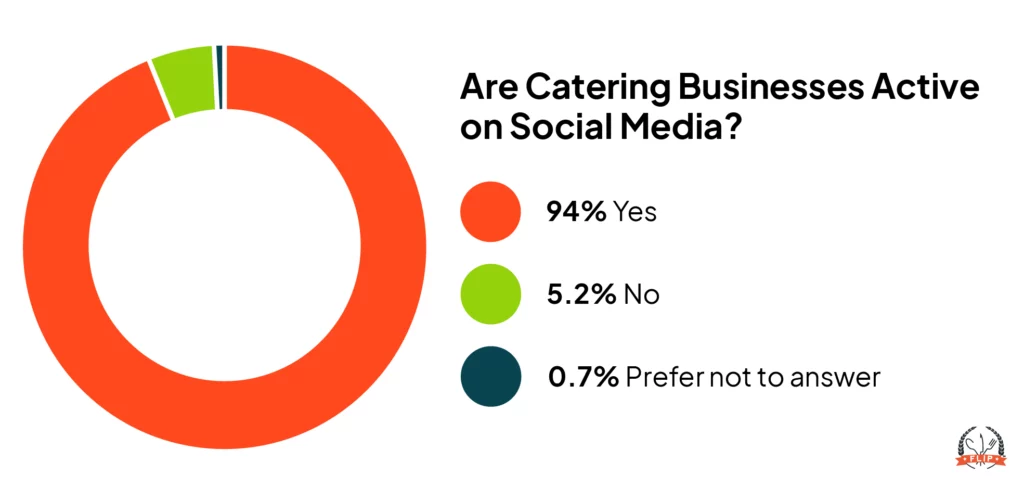
It’s not surprising that social media is the second most popular marketing channel for our catering policyholders when 94% say their business is active across various social platforms.
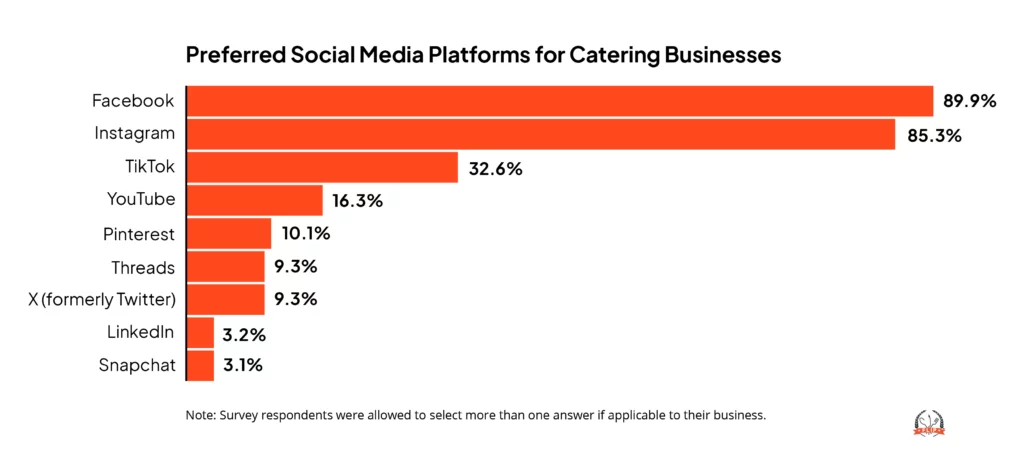
Of those active on social media, 89.9% are on Facebook, making it the best social media app for catering businesses. Instagram comes in at a close second place (85.3%), followed by TikTok (32.6%).
Insurance Considerations for Caterers
As with all food and beverage businesses, caterers are exposed to a variety of risks that can result in costly claims for your business. In fact, the average cost of a general liability claim for our policyholders was $6,438 in 2025.
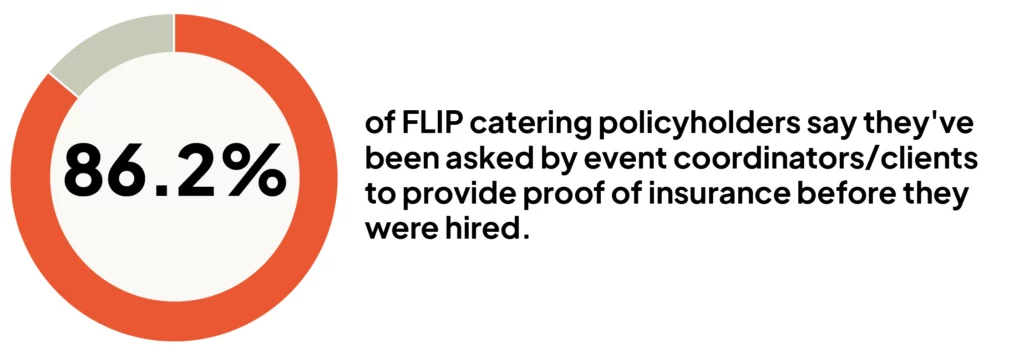
Beyond safeguarding your finances, getting insured is also a critical part of landing gigs for your catering business. 86.2% of our policyholders have been asked to present proof of insurance to an event coordinator or client in order to be hired.
Keep your finances secure and open your business up to more job opportunities with affordable catering insurance from FLIP, starting at just $25.92 per month!