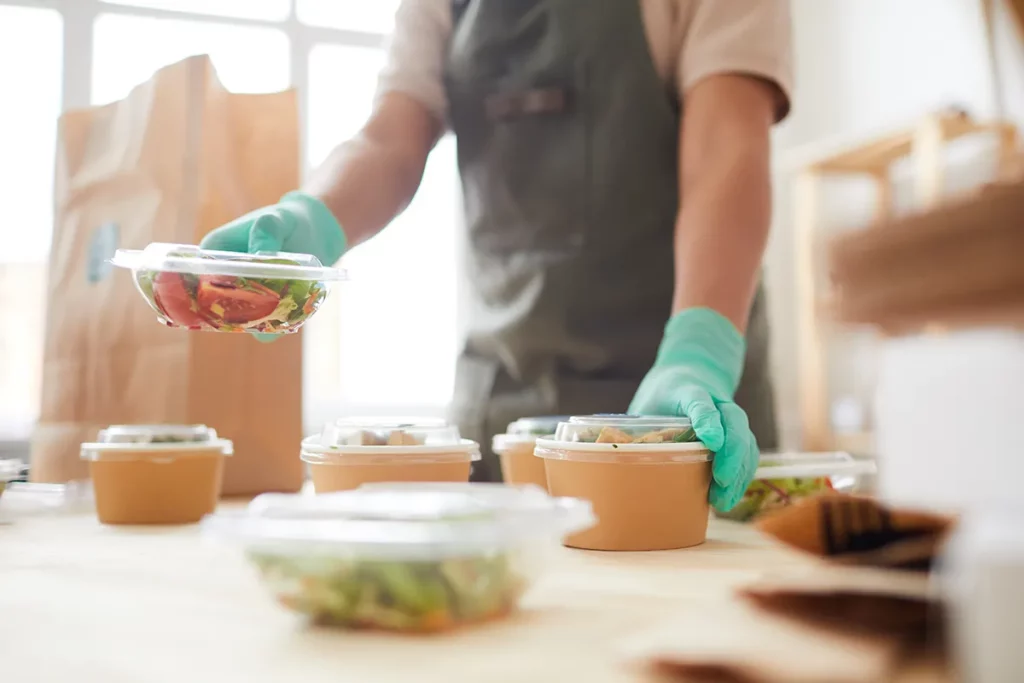
A ghost kitchen — aka virtual kitchen, cloud kitchen, or dark kitchen — is a food business that runs on a delivery-only model with no dine-in area or storefront. These unique businesses need a combination of liability coverages to properly protect against claims, including general, product, and cyber liability.
They’re also getting more and more popular, with the market value estimated to reach over $223 billion USD by 2033.
Running a ghost kitchen, but not sure what type of coverage you need? We’ve got your back. This guide will help you understand the most common coverages for ghost kitchens, how to tell if you need them, and how you can get them online from Food Liability Insurance Program (FLIP).
Is My Business Considered a Ghost Kitchen?
Because ghost kitchens are a relatively new concept, here’s a quick checklist to help you assess whether your business counts as one before you start shopping for insurance.
Check all that apply to your business:
✔️ You are a delivery/pickup only business with no dining area or customer-facing storefront
✔️ You run your business out of a shared commercial kitchen or commissary
✔️ You take orders primarily through delivery apps like DoorDash or Uber Eats
✔️ Your kitchen space is used by multiple other brands or businesses
✔️ You consider your business a virtual restaurant (e.g., you have a full menu and concept but aren’t tied to a storefront)
If two or more of these statements apply to your business, it’s probably a ghost kitchen.
What Insurance Does a Ghost Kitchen Need?
The type of insurance you need depends on your business model, but some coverages are standard for all ghost kitchens. We’ll start by looking at the must-haves before moving on to others that may suit your business.
| Coverage Type | Do You Need It? | What It Helps Protect Against | Starting Cost With FLIP |
|---|---|---|---|
|
General Liability |
Required — most commissary/commercial kitchen leases mandate it |
Third-party injuries and property damage on or from your operation |
Included in base policy from $25.92/mo. (bundled with product liability) |
|
Product Liability |
Required — same lease requirement; core food business risk |
Foodborne illness and unlabeled allergen claims tied to your food |
Included in base policy from $25.92/mo. (bundled with general liability) |
|
Cyber Liability |
Strongly recommended — near essential for a delivery-only, tech-dependent model |
Data breaches, ransomware, and stolen customer/payment data |
+$8.25/mo. (add-on) |
|
Tools & Equipment (Inland Marine) |
Situational — if you transport gear between locations |
Repair/replacement of mobile equipment you move, own, or rent |
Starting at +$11.17/mo. (add-on) |
|
Workers Compensation |
Required by law (most states) — if you have employees |
Employee medical costs, lost wages, disability, and death benefits |
Custom quote |
|
Commercial Auto |
Situational — if you or your staff drive for the business |
Damage/liability involving owned, leased, rented, or personal work vehicles |
Custom quote |
Required Insurance for Ghost Kitchens
While these types of insurance are not usually required by law, it’s very common for commercial kitchens (aka shared kitchens or commissaries) to contractually require them in rental agreements.
Commercial kitchen owners will have their own policy, but that coverage doesn’t typically apply to any damages or injuries you’re responsible for. The kitchen manager wants you to have your own coverage, so if you do cause a fire or forget to label an allergen, you’re financially prepared to handle that.
General Liability
Virtually all businesses need general liability insurance, and ghost kitchens are no exception. You may have heard this called “slip-and-fall” insurance before because it’s designed to cover injuries to other people (third-party injuries) on your premises.
It can also cover damage your business causes to someone else’s property (third-party property damage). If you accidentally damage your rented kitchen space, general liability insurance could help cover some (or all) of the repair costs.
| Example Scenario | How General Liability Insurance Can Help |
|---|---|
|
A delivery driver slips on a wet surface in your kitchen and breaks their arm |
Can cover the other person’s medical expenses and your legal expenses if they sue |
|
You accidentally start a grease fire in your rented kitchen that damages the building and equipment |
Can cover equipment replacements and property repairs |
Product Liability
Your ghost kitchen’s product is the food you serve. If that product harms someone, product liability insurance may cover costs related to that claim. Food businesses always run the risk of foodborne illnesses or unlabeled allergens, but product liability insurance is designed to help if that happens to you.
| Example Scenario | How Product Liability Insurance Can Help |
|---|---|
|
A customer claims the food they got from you was undercooked and gave them food poisoning |
Can cover their medical expenses or your legal expenses if sued |
|
Accidental peanut cross-contamination leads a customer to experience a severe allergic reaction, and they sue you |
Can cover their medical expenses and your legal expenses |
Cyber Liability
Running a ghost kitchen means relying heavily on tech, from delivery apps to online point-of-sale (POS) systems. While incredibly convenient, this tech is vulnerable to data breaches or failures that could cost you and your customers money.
Cyber liability insurance is a must-have for protecting your ghost kitchen. It’s designed to help cover both your expenses and your customers’ expenses if you are affected by a cybercrime. This includes:
- Restoring or replacing stolen data
- Legal fees if a customer sues you over stolen data
- Ransomware payment (up to the policy limits)
| Example Scenario | How Cyber Liability Insurance Can Help |
|---|---|
|
Your business is hit with a ransomware attack that locks you out of your POS system |
Can help cover the cost of paying the ransom to regain access to your system |
|
Hackers access your internal systems and gain access to sensitive data about your customers and suppliers |
Can help cover the cost of legal fees, such as hiring an attorney, settlements, and judgments |
The Cost of Insuring Your Ghost Kitchen
While not all ghost kitchens will need the following types of coverage, many will, which is why we encourage you to review these carefully to see if they make sense for your business.
Tools & Equipment (Inland Marine)
Despite its confusing name, inland marine insurance doesn’t have anything to do with insuring boats. At FLIP, we call it tools and equipment insurance because it’s designed to pay for repairs or replacements to your damaged or stolen mobile business equipment.
Commercial property insurance can cover fixed property inside a building, like ovens and refrigerators, but it doesn’t cover equipment you transport between locations. If you bring any of your gear on the road, such as between different rented commercial kitchen spaces, you need tools and equipment insurance. It’s made to cover both owned and leased/rented equipment.
| Example Scenario | How Tools & Equipment Insurance Can Help |
|---|---|
|
You transport a fryer to one of your new locations, but rough road conditions damage it on the way there |
Can help cover the cost of repairing or replacing the fryer |
|
A burglar breaks into your rented kitchen overnight and steals several pieces of equipment from you, including a toaster oven and stand mixer |
Can help cover the cost of repairing or replacing the stolen equipment (requires a police report) |
Best For:
Ghost kitchens with multiple locations that transport gear and equipment between these spaces
Workers Compensation
Every state has workers compensation laws, which require employers to provide certain benefits to employees who are hurt on the job or develop an illness related to their work. These benefits can be extremely expensive for employers, as they often include:
- Wage reimbursement
- Medical expenses
- Disability benefits
- Death benefits
That’s why nearly all states require employers to carry workers compensation insurance, so they’re financially prepared to support their employees if something goes wrong. Even if you aren’t legally required to have this coverage, getting it allows you to do right by your hardworking employees while protecting your ghost kitchen from a major financial burden.
| Example Scenario | How Workers Compensation Insurance Can Help |
|---|---|
|
One of your line cooks burns themselves severely while transferring a pot of boiling water and needs medical attention and time off to recover |
Can help cover state-mandated workers compensation expenses, such as medical fees and lost wages while they recover |
|
Due to poor ventilation in the kitchen, an employee develops a respiratory disease from smoke and grease vapor |
Can help cover state-mandated workers compensation expenses, including rehabilitation and lost wages while they take time off from work |
Best For:
Ghost kitchens with employees, including:
– Full-time employees
– Part-time employees
– Seasonal/temporary workers
– Uninsured independent contractors
Commercial Auto
Many ghost kitchens work with third-party delivery apps to get their food in the hands of customers, but if you have your own delivery vehicle(s), commercial auto insurance is critical. This policy can cover damage done to your work vehicle or damage it causes, such as a collision with another driver.
If your employees use their own vehicles to run errands for your business, like picking up supplies or equipment, a commercial auto policy can also cover them while performing those duties. Commercial auto insurance applies to vehicles you own, lease, or rent.
| Example Scenario | How Commercial Auto Insurance Can Help |
|---|---|
|
One of your personal delivery vehicles is rear-ended at a stoplight on the way to a customer’s house |
Can help cover damage to the delivery vehicle and medical expenses for the employee driving it |
|
You ask an employee to pick up some ingredients from a supplier in their personal car, and they get into a collision with another driver |
Can help cover damage to the employee’s vehicle and the other vehicle, as well as injuries to both parties |
Best For:
Ghost kitchens with their own fleet of delivery vehicles or those that use personal vehicles (including employees’ personal vehicles) for work purposes (e.g., picking up supplies or transferring equipment)
Heads Up: Personal auto policies typically do not cover vehicles you drive for work. If you have a vehicle in your business’ name, you need commercial auto insurance.
Recommended Insurance for Ghost Kitchens
With FLIP, a basic commercial kitchen insurance policy for ghost kitchens starts at $25.92 per month. This policy includes general liability and product liability insurance, two essential coverages for delivery-only kitchens.
For an additional $8.25 a month, you can add cyber liability coverage to your policy. Because this coverage is so critical for ghost kitchens, which rely heavily on tech, including it is highly recommended.
If your business needs additional coverage, that will affect the cost of your premium as well:
- Tools and equipment: +$11.17/mo.
- Workers compensation: custom quote
- Commercial auto: custom quote
Other factors that could affect what you pay include your ghost kitchen’s gross annual income and whether you’ve filed expensive claims in the past for your business.
How to Get Ghost Kitchen Insurance From FLIP
Insuring your ghost kitchen business is easy with FLIP’s online purchasing process. We specialize in liability insurance for food businesses and offer the coverage you need in one convenient place. No one-size-fits-all small business policies or comparing quotes here.
Ready to protect your ghost kitchen? Start here for general and product liability coverage:
- Fill out your application
- Enter required information about your business
- Select add-on coverages, including cyber liability or tools and equipment insurance, as needed
- Get your free quote and purchase your policy online
Need workers compensation insurance or commercial auto coverage? These are separate applications that require assistance from one of our licensed agents. Fill out the application(s) you need, and an agent will reach out to guide you through the rest of the purchasing process.
FAQs About Ghost Kitchen Insurance
Is Ghost Kitchen Insurance Legally Required?
Some types of insurance may be legally required for ghost kitchens, such as workers compensation if you have employees. Others, such as general liability, are usually contractually required by the commercial kitchen owner or landlord.
Read more about commercial kitchen requirements.
How Much Does a Ghost Kitchen Cost Per Month?
The monthly cost of running a ghost kitchen can vary depending on where you live, but recurring costs typically look like:
- Commercial/shared kitchen rent: $1,500–$4,000/mo.
- Delivery platform fees: 15–30% of order value
- Labor: 25–35% of revenue
- Ingredients: 28–35% of revenue
Does My Commissary or Rented Kitchen’s Insurance Protect Me?
Your commissary’s policy is there to protect them, not you, from injuries or damages they cause. If your business is responsible for any property damage or injuries (including food poisoning), you need your own coverage.

Alex Hastings
Alex Hastings is a licensed insurance agent in the state of Washington. Alex leverages her experience as a lover of fast-casual food, baked goods, and iced oat milk lattes. She holds a B.A. in Creative Writing from Western Washington University. Before working at Veracity, she was a retail copywriter at Zulily and an English language teacher in South Korea. Alex is fully trained on FLIP insurance coverages and writes content that connects food and beverage business owners with the policies they need.
Alex Hastings is a licensed insurance agent in the state of Washington. Alex leverages her experience as a lover of fast-casual food, baked goods, and iced oat milk lattes. She holds a B.A. in Creative Writing from Western Washington University. Before working at Veracity, she was a retail copywriter at Zulily and an English language teacher in South Korea. Alex is fully trained on FLIP insurance coverages and writes content that connects food and beverage business owners with the policies they need.
Andrew Adamus
Andrew Adamus is a Program Manager for Food Liability Insurance Program (FLIP). He is an underwriting leader with more than a decade of experience in commercial insurance, holding an MBA from Syracuse University along with AINS, API, AU, and AIS designations. Andrew believes that successful underwriting is built on strong relationships, thoughtful analysis, and a commitment to helping policyholders protect what matters most. His goal is to deliver insurance solutions that support long-term success.
Andrew Adamus is a Program Manager for Food Liability Insurance Program (FLIP). He is an underwriting leader with more than a decade of experience in commercial insurance, holding an MBA from Syracuse University along with AINS, API, AU, and AIS designations. Andrew believes that successful underwriting is built on strong relationships, thoughtful analysis, and a commitment to helping policyholders protect what matters most. His goal is to deliver insurance solutions that support long-term success.