
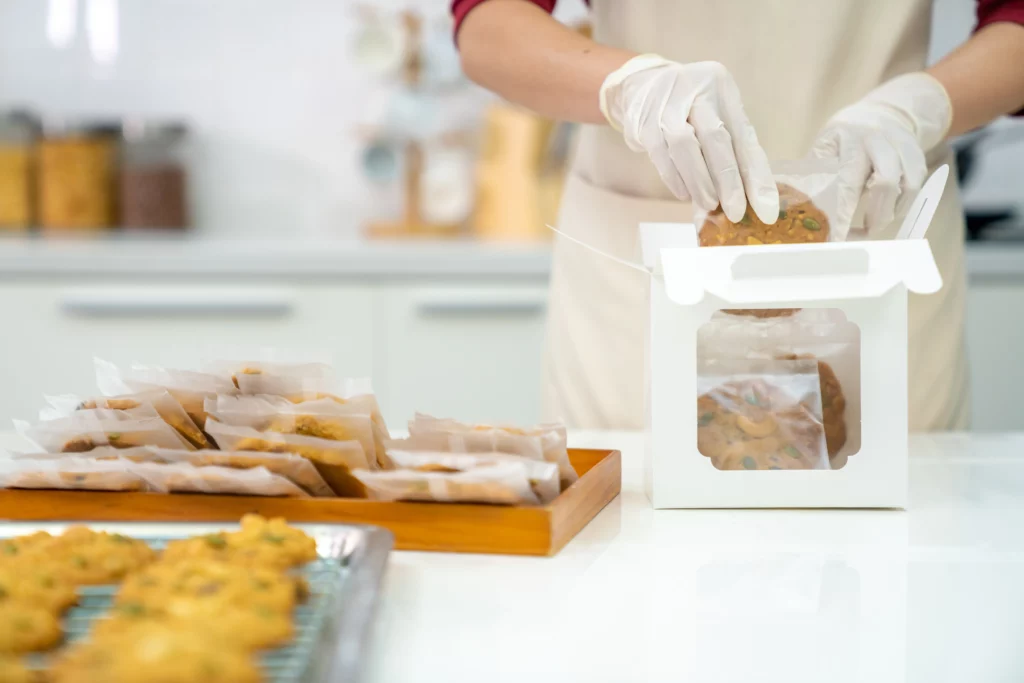
A cottage food license allows you to legally sell certain homemade foods in your state (typically non-refrigerated products). It’s generally issued by your state once you prove you’re following proper labeling rules and have completed any necessary food safety trainings.
Seems simple, right? But when you’re just starting out, and your to-do list is long, getting the proper license for your home-based business can feel like just another thing to stress over.
To make this less overwhelming, we’ve broken down how to get a cottage food license into five simple steps. Learn easy-to-follow instructions, a directory of state cottage food agencies, and a sneak peek at next steps once you’ve checked “get licensed” off your list.
How to Get a Cottage Food License in 5 Steps
Start your home-based food business off on the right foot by following these steps to becoming a licensed cottage food operation.
Note: Exact requirements and steps may vary by state. The following is a general guide for what to expect when licensing or registering your cottage food business. It is not legal advice. Always check your state’s official law for complete details and requirements.
1. Check Your State’s Cottage Food Law
Your state’s cottage food laws determine whether you need a license/registration or not, and what you need to do and/or provide to get one. Laws vary by state, but here are some key points to keep in mind.
Cottage Food License vs. Registration
Not every state requires a cottage food license. In some states, you go through a registration process that tends to be faster and simply lets your government know your business exists. You may be able to start selling as soon as your registration is complete.
On the other hand, a license generally requires a longer application process, more documentation, and you cannot sell until your license is issued.
In some cases, you may not need a license or registration to start selling at all; you just need to make sure you follow your state’s cottage food laws at all times to avoid fines and other penalties.
Sales Limits
Some states cap revenue for cottage food businesses, setting a legal limit for how much they can earn per year.
These sales caps range from several thousand to hundreds of thousands of dollars. In recent years, many states have raised their sales caps, including Virginia, where the annual cap increased from $3,000 to $9,000 when House Bill (HB) 759 passed in 2024.
City/County Rules
Sometimes, cities and counties have their own rules regulating cottage food businesses in addition to state regulations. These can include:
- Zoning restrictions: You may need a special home occupation permit to run your business from home
- Different health department enforcement: The specific inspection practices, food label reviews, and application processing speed can vary by local health department
- Local business license: Your state may not issue a formal cottage food license, but your city/county might mandate a general business license or registration with local authorities
2. Make Sure Your Product Qualifies for Sale
Every state sets restrictions on which types of food products you can legally sell from your home kitchen. This is done to make sure that home-based food businesses don’t pose a major public health risk.
However, the degree of restriction varies widely across states. Foods that are mostly allowed include “low-risk,” non-refrigerated food items, such as:
- Breads
- Cookies
- Cakes (without cream filling)
- Candy
- Dry mixes
- Preserves
You may see these foods referred to as “non-TCS” foods, or non-time/temperature control for safety foods. As a result, most states ban TCS foods as well as other “high-risk” products from cottage food sales, including:
- Meat
- Seafood
- Dairy-heavy products (e.g., cheesecake)
- Custards
- Canned vegetables (unless preserved in acid)
3. Complete Food Safety Training (If Required)
You may be required to complete a food safety course to get your cottage food license. In most cases, a basic food handler course will do the trick rather than a full food manager certification.
These courses cover important food safety topics, such as:
- Personal hygiene (proper handwashing, not working while sick, avoiding cross-contamination)
- Safe food handling (preventing contamination, proper food storage, cleaning and sanitizing surfaces)
- Allergen awareness (major allergens, avoiding cross-contact, proper allergen labeling)
Most courses involve a few hours of studying and coursework before taking an exam. While there are many course options available, always check which ones are approved by your state. Below are a few of the most popular options nationwide.
Swipe →
| Course/Provider | Typical Cost | Format | Time |
|---|---|---|---|
|
~$15 |
Online |
~1–2 hours |
|
|
~$10 (varies by state) |
Online |
~1–3 hours |
|
|
~$10–$30 |
Online |
~1–3 hours |
|
|
Local health department training |
Varies by state |
Typically online or in-person |
Generally ~1–3 hours |
4. Prepare Your Labels
Your state’s cottage food laws also set labeling standards you must follow to legally sell your products. In many cases, you must submit your labels along with your license application as part of the approval process.
In fact, labeling errors are among the biggest reasons cottage food license applications are delayed.
Exact wording and requirements differ depending on your state, but your labels should include:
- The name of the product
- An ingredient list (organized by weight)
- Allergen statement/disclosure
- Your name and address
- A cottage food disclaimer (e.g., “Made in a home kitchen”)
States with stricter labeling laws require more than the basics. If you live in an area with heavier regulations, you may also need to include the following on your product labels:
- Your permit number (once you have it)
- A production date
- A “best by” date
5. Submit Your Cottage Food License Application or Registration
At this point, you likely have everything you need to either apply for your license or register your cottage food business. It won’t surprise you by now that this process looks different depending on your state, but there are a few fairly standard parts, no matter where you live.
Register or Start Your Application
Whether you only need to register your business or need to submit a license application, there’s a good chance you can do it 100% online.
Be prepared to provide information, like:
- Your full legal name
- Your business name
- Home address (where you’ll prepare your food for sale)
- Contact information (phone number, email, etc.)
You may also need to provide your:
- Social Security Number (SSN) for tax tracking purposes
- Proof of local business registration, if applicable
Describe Your Products
Your state needs to know what kind of products you plan to sell so they can ensure you’re not going to produce prohibited items.
Be as accurate and specific as possible. Even if you’re unsure about whether your product qualifies, getting rejected at this stage is better than facing a fine or suspension later on.
Provide Required Paperwork
Include a copy of your:
- Food safety training certificate or food handler’s card
- Your sample product label(s)
- Any other documents your state requires
Forgetting to include mandatory documents can lead to delays, so always check to see what your state requires before you start your application so you’re prepared.
Schedule Your Inspection
In states that require a kitchen inspection before issuing a cottage food license, you may be asked to schedule this during your application.
Health inspections can be a major source of stress and anxiety for business owners (even seasoned ones!), but knowing how to prepare helps. Check out our health inspection checklist for more information on what to expect and how to pass with flying colors.
Note: States that require a kitchen inspection usually take longer to issue a cottage food license than those that don’t.
Pay Your Application or Registration Fee
While some states don’t have application fees, most charge between $25–$50. However, states with stricter cottage food laws may charge anywhere from $100–$300.
You can usually pay your fee online, although some areas may require you to mail a check.
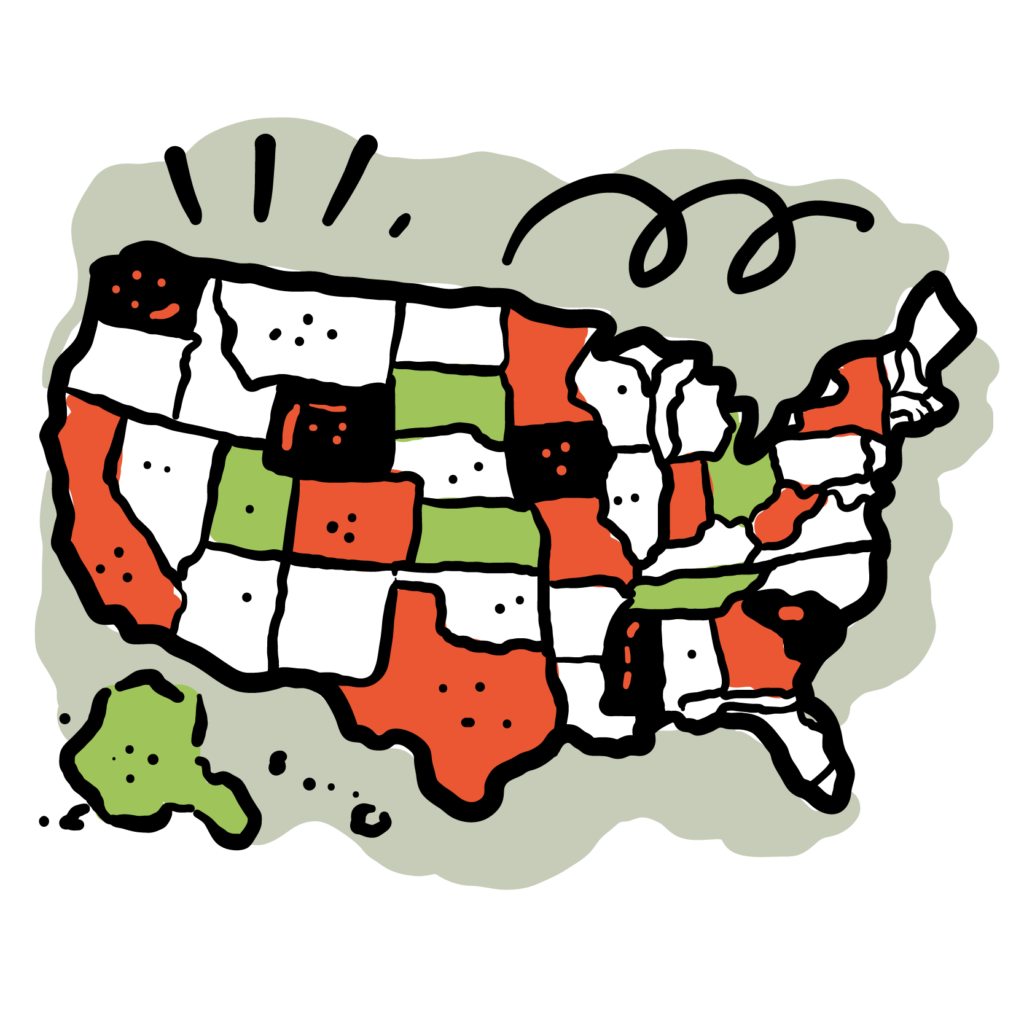
Find Your State’s Cottage Food License Rules
Note: The following directory is based on information obtained at the time this guide was published. Cottage food laws change frequently as home-based food businesses become more popular, so always check with your state or local health department to confirm current licensing rules.
Additionally, if your state does not require a cottage food license or registration, you may still be required to obtain other permits, such as a food handler’s permit or a food license exemption. Follow the “Cottage Food Law Information” link under your state for more information.
Pro Tip: Selling soon? Markets and events often ask for proof of insurance when you apply to become a vendor. Learn what cottage food insurance covers and how to get a COI fast.
Alabama
Cottage Food License/Registration Required?
✔️ Yes
Where to Apply →
Your county health department
Cottage Food Law Information
Alabama Department of Public Health
Alaska
Cottage Food License/Registration Required?
✖️ No
Cottage Food Law Information
Alaska Division of Environmental Health, Food Safety, and Sanitation Program
Arizona
Cottage Food License/Registration Required?
✔️ Yes
Where to Apply →
Arizona Department of Health Services
Cottage Food Law Information
How to Register for the Cottage Food Program
Arkansas
Cottage Food License/Registration Required?
✖️ No
Cottage Food Law Information
Arkansas Homemade Food Production Guidelines
California
Cottage Food License/Registration Required?
✔️ Yes
Where to Apply →
Your local health department
Cottage Food Law Information
California Department of Health Food & Drug Branch – Cottage Food Operations
Colorado
Cottage Food License/Registration Required?
✖️ No
Cottage Food Law Information
Colorado Department of Public Health & Environment – Cottage Foods Act
Connecticut
Cottage Food License/Registration Required?
✔️ Yes
Where to Apply →
State of Connecticut Department of Consumer Protection
Cottage Food Law Information
State of Connecticut Department of Consumer Protection – Cottage Food Operator (CFO)
Delaware*
Cottage Food License/Registration Required?
✔️ Yes
Where to Apply →
Delaware Health and Social Services Department of Public Health
Cottage Food Law Information
Delaware Office of Food Protection – Cottage Food Establishment
District of Columbia
Cottage Food License/Registration Required?
✔️ Yes
Where to Apply →
DC Health
Cottage Food Law Information
DC Health – Cottage Food Businesses
Florida
Cottage Food License/Registration Required?
✖️ No
Cottage Food Law Information
Florida Department of Agriculture and Consumer Services – Cottage Foods
Georgia
Cottage Food License/Registration Required?
✖️ No
Cottage Food Law Information
Georgia Department of Agriculture – Cottage Food
Hawaii
Cottage Food License/Registration Required?
✖️ No
Cottage Food Law Information
Hawaii State Department of Health – Homemade Food Products
Idaho
Cottage Food License/Registration Required?
✖️ No
Cottage Food Law Information
Idaho Department of Health & Welfare – Food Safety
Illinois
Cottage Food License/Registration Required?
✔️ Yes
Where to Apply
Your local health department
Cottage Food Law Information
Illinois Department of Public Health – Cottage Food
Indiana
Cottage Food License/Registration Required?
✖️ No
Cottage Food Law Information
Indiana State Department of Agriculture Home-Based Vendors FAQs
Iowa
Cottage Food License/Registration Required?
✖️ No
Cottage Food Law Information
Iowa Department of Inspections, Appeals, & Licensing – Cottage Food Law
Kansas
Cottage Food License/Registration Required?
✖️ No
Cottage Food Law Information
Kansas Department of Agriculture – Laws, Regulations, & Code for Food Safety & Lodging
Kentucky
Cottage Food License/Registration Required?
✔️ Yes
Where to Apply
Home-Based Processor Registration Form
Cottage Food Law Information
Kentucky Cabinet for Health and Family Services – Home-Based Processing
Louisiana
Cottage Food License/Registration Required?
✖️ No
Cottage Food Law Information
Louisiana Cottage Food Law
Maine
Cottage Food License/Registration Required?
✔️ Yes
Where to Apply
Maine Department of Agriculture, Conservation, & Forestry
Cottage Food Law Information
Maine Department of Agriculture, Conservation, & Forestry – Home Food License 101
Maryland
Cottage Food License/Registration Required?
✖️ No
Cottage Food Law Information
Maryland Cottage Food Businesses
Massachusetts
Cottage Food License/Registration Required?
✔️ Yes
Where to Apply
Your local health department
Cottage Food Law Information
Mass.gov Residential Kitchen Questions & Answers
Michigan
Cottage Food License/Registration Required?
✖️ No
Cottage Food Law Information
Michigan Department of Agriculture & Rural Development – Cottage Foods Information
Minnesota
Cottage Food License/Registration Required?
✔️ Yes
Where to Apply
Minnesota Department of Agriculture – Cottage Food Producer Registration
Cottage Food Law Information
Minnesota Department of Agriculture – Cottage Food Law Guidance
Mississippi
Cottage Food License/Registration Required?
✖️ No
Cottage Food Law Information
Mississippi State Department of Health – Cottage Food Operation FAQs
Missouri
Cottage Food License/Registration Required?
✖️ No
Cottage Food Law Information
Missouri Department of Health & Senior Services – Home-Based Kitchen Food Production Guidance
Montana
Cottage Food License/Registration Required?
✔️ Yes (unless products are only being sold at farmers markets)
Where to Apply
Montana Department of Public Health & Human Services – Cottage Food Operation Registration
Cottage Food Law Information
Montana Environmental Health & Food Safety – Cottage Food FAQs
Nebraska
Cottage Food License/Registration Required?
✔️ Yes
Where to Apply
Nebraska Department of Agriculture
Cottage Food Law Information
Nebraska Department of Agriculture – Cottage Food Registration
Nevada
Cottage Food License/Registration Required?
✔️ Yes
Where to Apply
Your local health department
Cottage Food Law Information
Nevada Division of Public and Behavioral Health – Cottage Food Operations Guide
New Hampshire
Cottage Food License/Registration Required?
✔️ Yes (unless selling exclusively at a farmers market or retail food store)
Where to Apply
New Hampshire Department of Health & Human Services
Cottage Food Law Information
New Hampshire Department of Health & Human Services – Homestead Food Operations
New Jersey
Cottage Food License/Registration Required?
✔️ Yes
Where to Apply
New Jersey Department of Health
Cottage Food Law Information
New Jersey Department of Health – Cottage Food
New Mexico
Cottage Food License/Registration Required?
✖️ No
Cottage Food Law Information
New Mexico Environment Department – Homemade Food Act
New York
Cottage Food License/Registration Required?
✔️ Yes
Where to Apply
New York State Department of Agriculture and Markets
Cottage Food Law Information
New York State Department of Agriculture and Markets – Home Processing
North Carolina
Cottage Food License/Registration Required?
✔️ Yes
Where to Apply
North Carolina Department of Agriculture & Consumer Services
Cottage Food Law Information
North Carolina Department of Agriculture & Consumer Services – Home Processor
North Dakota
Cottage Food License/Registration Required?
✖️ No
Cottage Food Law Information
North Dakota Health & Human Services – Cottage Food
Ohio
Cottage Food License/Registration Required?
✖️ No
Cottage Food Law Information
Ohio Department of Agriculture – Cottage Foods
Oklahoma
Cottage Food License/Registration Required?
✖️ No
Cottage Food Law Information
Oklahoma Cottage Food Law
Oregon
Cottage Food License/Registration Required?
✖️ No (as long as you only sell non-TCS foods)
Cottage Food Law Information
Oregon Department of Agriculture – Food License Exemptions
Pennsylvania
Cottage Food License/Registration Required?
✔️ Yes
Where to Apply
Pennsylvania Department of Agriculture
Cottage Food Law Information
Commonwealth of Pennsylvania Food Safety – Limited Food Establishment
Rhode Island
Cottage Food License/Registration Required?
✔️ Yes
Where to Apply
Rhode Island Department of Health
Cottage Food Law Information
Rhode Island Department of Health – Cottage Foods
South Carolina
Cottage Food License/Registration Required?
✖️ No
Cottage Food Law Information
South Carolina Home-Based Food Production Law Guidance
South Dakota
Cottage Food License/Registration Required?
✖️ No
Cottage Food Law Information
South Dakota Legislature House Bill 1322
Tennessee
Cottage Food License/Registration Required?
✖️ No
Cottage Food Law Information
Tennessee Food Freedom Act
Texas
Cottage Food License/Registration Required?
✔️ Yes (if selling TCS foods; otherwise exempt)
Where to Apply
Texas Department of State Health Services
Cottage Food Law Information
Texas Health & Human Services – Cottage Food Production
Utah
Cottage Food License/Registration Required?
✔️ Yes
Where to Apply
Utah Department of Agriculture and Food
Cottage Food Law Information
Utah Department of Agriculture and Food – Cottage Food Production
Vermont
Cottage Food License/Registration Required?
✖️ No
Cottage Food Law Information
Vermont Department of Health – Home-Based Food Licenses and Exemptions
Virginia
Cottage Food License/Registration Required?
✔️ Yes
Where to Apply
Virginia Department of Agriculture and Consumer Services
Cottage Food Law Information
Virginia Department of Agriculture and Consumer Services – Home & Commercial Kitchen-Based Businesses
Washington
Cottage Food License/Registration Required?
✔️ Yes
Where to Apply
Washington State Department of Agriculture (English Application)
Washington State Department of Agriculture (Spanish Application)
Cottage Food Law Information
Washington State Department of Agriculture – Cottage Food Operation
West Virginia
Cottage Food License/Registration Required?
✖️ No
Cottage Food Law Information
West Virginia Farmers Market Vendor Guide
Wisconsin
Cottage Food License/Registration Required?
✖️ No (if selling non-potentially hazardous foods)
Cottage Food Law Information
Wisconsin Department of Agriculture, Trade, and Consumer Protection – Licenses and Homemade Baked Goods
Wyoming
Cottage Food License/Registration Required?
✖️ No
Cottage Food Law Information
Wyoming Food Freedom Act
Next Steps for Your Cottage Food Business
Thinking ahead to what life looks like after licensing? Smart. Here are three major milestones on your horizon you don’t want to overlook.
Lock In Your Pricing
After confirming your product(s) qualify for sale in your state, it’s time to price them.
If you’re intimidated by this task, you’re not alone. Many entrepreneurs worry about setting margins high enough that they’ll make a profit without overcharging and turning customers away with sticker shock.
Check out these four time-tested food pricing strategies to get started. Remember — you’re not a multinational company mass-producing products. You’re a home-based business owner turning your passion into profits, and you deserve to get paid what you’re worth.
Choose Your First Sales Channel
While some cottage food businesses establish multiple sales channels, it’s best practice to start with one before branching out. You don’t want to stretch yourself thin trying to manage too much at once, and you can always add more as your business grows!
Here are a few popular sales channels for home-based food businesses:
- Farmers markets
- Events
- Food festivals
- Online
- Wholesale
You may even branch out into retail once your business starts gaining speed. Just don’t forget to refer to your state’s cottage food laws to see which channels you’re legally allowed to sell through.
Protect Your Cottage Food Business With Insurance
Protect Your Cottage Food Business With Insurance
You may not be legally required to get insured before you can start selling, but most states strongly recommend carrying a home food business liability policy.
The truth is, cottage food businesses face risks like any other food operation. That includes customers getting food poisoning from one of your products, or having a severe reaction because of an unlabeled allergen. These honest mistakes can turn into expensive lawsuits you don’t want to face alone.
With cottage food insurance, you don’t have to. It’s designed to cover some of the biggest expenses you’d face in those situations, including medical bills and legal fees.
A cottage food license may permit you to sell your products, but liability insurance allows you to sell with the confidence that only comes from having a financial security net.
FAQs About Getting a Cottage Food License
What Do I Need to Sell at Markets and Events Besides a Cottage Food License?
Most event organizers will ask you to provide a Certificate of Insurance (COI) along with your application. This is an official document issued by your insurance company that includes important policy details, such as the coverages you have and your limits of insurance.
The market organizers may also ask you to add them to your policy as an additional insured. This extends your coverage to them for any covered mistakes you cause at the event, and they will be listed on your COI.
What Is the Most Profitable Food to Sell From Home?
While there isn’t one simple answer to this question, the most profitable cottage food product will be one that poses low risk, has high margins, and a steady demand. Generally, this includes:
- Specialty breads (especially sourdough)
- Candy and/or fudge
- Dry baked good mixes (e.g., brownie mix or pancake mix)
- Granola
- Custom-decorated sugar cookies
Each of these items is relatively inexpensive to make, typically produced in batches, and popular with consumers. Remember, the best product for your business is always the one you can consistently produce and sell, not necessarily the most complex or innovative one.
Do I Need a Business License in Addition to a Cottage Food License?
You might, depending on your local laws. Some states require cottage food businesses to get a business license or sales tax registration, so check with your city or county clerk’s office.
Can I Sell My Cottage Food Products Online?
In many states, yes! However, this is often limited to online sales within your state. Cottage food laws don’t usually permit interstate shipping because regulations can vary widely from one place to the next.
What Happens If I Sell Food Without a Cottage Food License?
Selling without a license can lead to expensive fines or orders to shut down your business (temporarily or permanently). It’s always better to follow the rules before you ever sell your first product to avoid unnecessary expenses and roadblocks.