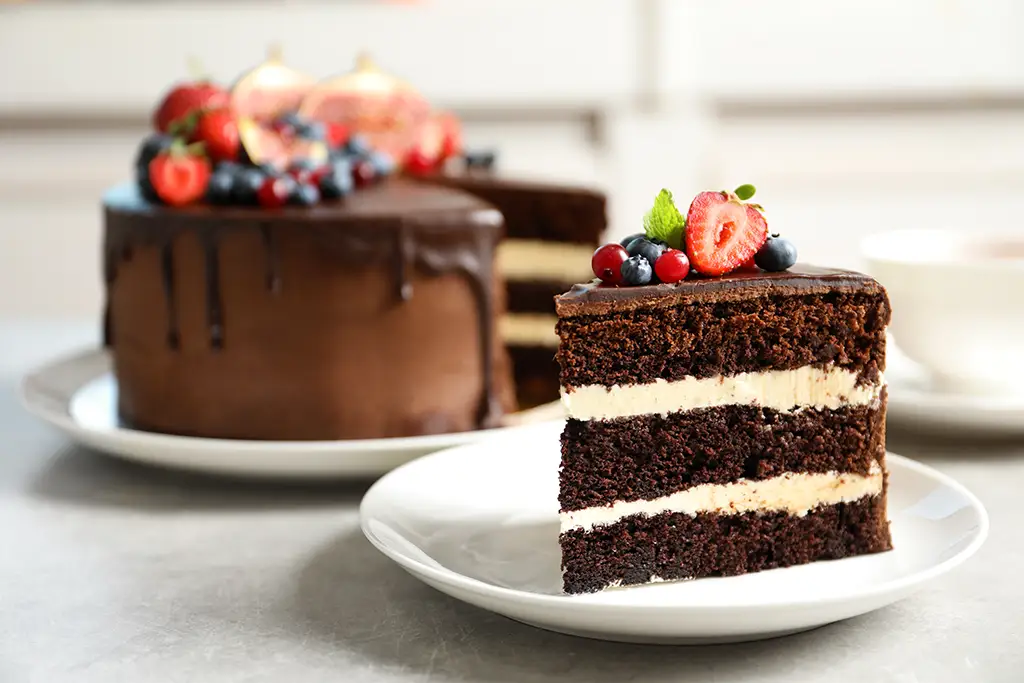
Starting a cake business from home involves following your state’s cottage food laws, pricing your cakes, and protecting your new endeavor with liability insurance.
Turn your life’s passion into a profession with our seven-step guide, which walks you through all the details you need about running a cake business out of your home. Don’t forget to download our free checklist before you go to help you stay on track throughout this exciting (and sometimes overwhelming) process!
1. Research Your State’s Cake-Specific Cottage Food Laws
If you’re starting a baking business from home, regardless of whether you sell elegant wedding cakes or customized cupcakes, you must follow legal restrictions to avoid facing fines or closures. The restrictions that apply to home-based cake businesses are called cottage food laws, and they vary by state.
Common cottage food restrictions include:
- Income caps: Some states cap sales at a specific amount, ranging from several thousand to hundreds of thousands of dollars, including Colorado, Florida, and Minnesota. However, other states have no sales caps whatsoever, such as Delaware, Ohio, and Tennessee.
- Prohibiting the sale of perishable foods: You may only be allowed to sell “non-TCS” cakes, or cakes that are non-temperature-controlled for safety. This means cakes with real dairy frosting or filling made from cream cheese or buttercream are often illegal to sell from home.
- No online sales: Your state may not allow you to sell homemade cakes online, so you may have to rely on in-person sales.
- Home inspections: Some states require you to pass a home inspection before you can start selling cakes from home. These inspections focus on your kitchen, ensuring it meets various safety requirements (e.g., access to one sink for handwashing and another for washing dishes and equipment).
- Required permit: You may be required to obtain a cottage food permit before you get your business up and running. This permit is often issued once you’ve passed a home inspection, as mentioned above.
- Labeling standards: If you sell packaged or pre-made cakes (aka not custom, made-to-order ones), you may be required to meet specific labeling requirements. These are typically set by your state’s department of agriculture or health, so check their websites for more details.
Heads Up: While it may be tempting to cut corners and ignore cottage food laws in your state, especially if you live somewhere that doesn’t require home inspections, it’s never worth it. If you use real cream cheese frosting and someone reports you for breaking the law or gets sick because it went bad, you could face expensive fines or permanent closure.
2. Pick Your Cake Specialty
While you may enjoy making any and all kinds of cakes, every business benefits from having a specialty. It makes it easier to market your cake business and target customers who are more likely to buy from you.
Your home-based cake business might specialize in:
- Wedding cakes
- Cupcakes or cake pops
- Custom cakes (e.g., birthdays and anniversaries)
- Everyday dessert cakes
- Dietary restrictions (e.g., gluten-free or vegan cakes)
Just because you specialize in custom birthday cakes doesn’t mean you can’t make some for weddings as well. It means you’ll lead with birthday cakes in your marketing and devote the majority of your time, energy, and money to that part of your business.
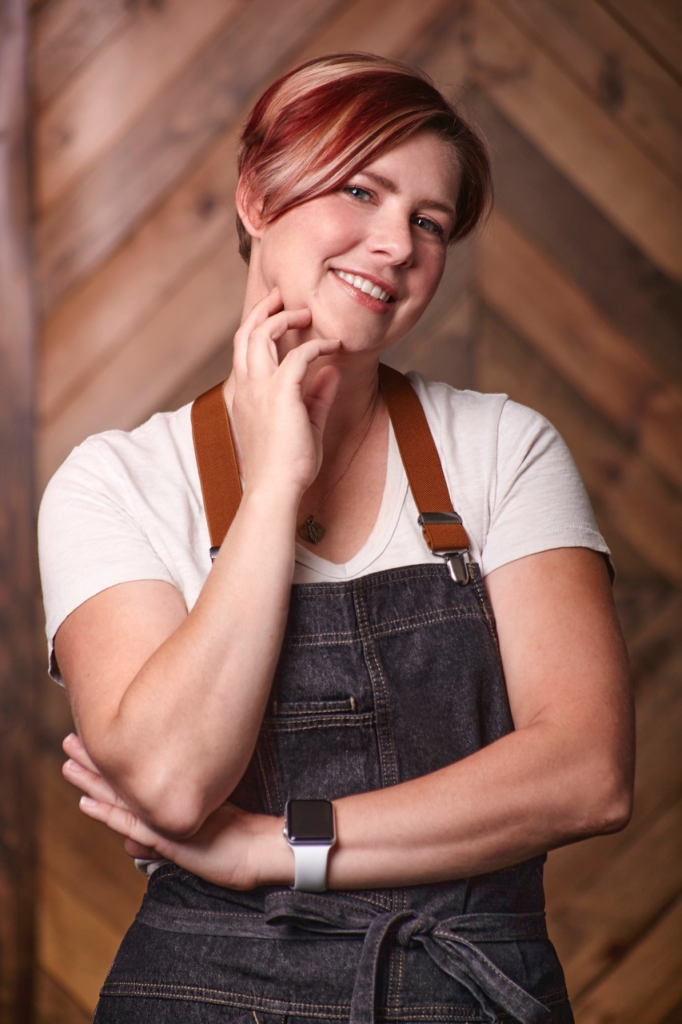
“You can’t make everyone happy, and that’s okay,” says Kelli Marks (@sweetlovebakes), owner of home-based cake business Sweet Love Bakery and author of Easy One-Bowl Baking. “Find what you’re good at and do that.”
Need a little help making that decision? Ask yourself these questions:
- What kind of cake do I enjoy making most? The last thing you want to do is lock yourself into a specialty that doesn’t bring you joy or stresses you out too much.
- Which of my cakes do I receive the most compliments on? If everyone raves about your gluten-free cupcakes, that’s a good indicator of what might make you stand out from the competition.
- What do I have the capacity/space to bake at volume in my home? You may dream of starting a cupcake business, but if you don’t have much storage space, that might not be the right call. Or, you may need to rent a commercial kitchen.
3. Set Up a Cake-Ready Kitchen
Running your cake business from home is a convenient, affordable way to enter the industry. But having a home kitchen with the capacity to keep up with orders and volume is very different than one suited for hobby baking.
Take a look at these lists of the equipment and storage supplies you need, and compare them with what you already have at home.
Essential Equipment*
- Oven
- High-capacity stand mixer
- Dowels
- Tier separators
- Cake drums in multiple sizes
- Transport boxes
- Cake leveler
- Decorating tools (piping bags and tips, turntable, etc.)
*This is not an exhaustive list. Your equipment needs may vary depending on the type of cakes you make.
Storage & Workspace
- Dedicated fridge for holding cakes
- Bulk containers for dry ingredients
- Label maker
- Designated space for storing ingredients (separate from your normal pantry)
- Staging and prep area
Pro Tip: Equipment expenses are a big part of your startup costs, but they aren’t the only ones. Learn more about what those could include in our guide to running a bakery from home.
4. Name and Register Your Cake Business
Naming your cake business allows you to get as creative as you do with your bakes, and chances are you probably have a few ideas in mind already. Just make sure you keep it:
- Short and sweet: Names that get right to the point without a lot of fluff are easier for customers to remember
- Clear: The fact that you make cakes (and the type of cakes you make) should be easy to tell from the name of your business
- Unique: You don’t want to start your business and find out later that the name you picked is similar (or identical!) to the name of another local cake business
After coming up with the perfect name, it’s time to register it. In most cases, this means registering your business name with your state or local government. There are four ways to do this, though you don’t have to do them all, and only some may be required depending on where you live:
- Entity name: Protects your business name at the state level
- Trademark: Protects your business name at the federal level
- Domain name: Protects your business name as a website address
- Doing Business As (DBA): May be legally required depending on where you live/your business structure (but doesn’t offer legal protection like the other three)
If you only do business under your legal name (and not a business name), you aren’t required to register your business at all. However, opting not to register means missing out on legal and tax benefits, as well as personal liability protection.
Pro Tip: Feeling stuck on picking the perfect name? Check out our list of cake business name ideas to get your creative gears turning.
5. Protect Your Cake Business With Insurance From FLIP
Insurance may not be top-of-mind when you think about starting your home cake business, but it should be. Running your business at home might save you money compared to opening a retail cake shop, but you still face liability risks that could cost you thousands of dollars.
For example, let’s say someone has an allergic reaction to the almond extract you used in a batch of cupcakes because you forgot to include it on the label. If they sue you for damages, cake maker liability insurance could help cover your legal fees and the customer’s medical expenses.
Some cake business owners think their homeowners insurance will cover claims like these because their business activities take place in their home. This is not usually the case.
Homeowners insurance policies typically exclude coverage for claims caused by business activities. Cake maker liability insurance is there to fill that risky coverage gap and help protect you and your business from injuries to other people (including allergic reactions and food poisoning) and damage to their property caused by your business activities.
You wouldn’t deliver a custom cake to a client without a transport box — don’t run your business without the financial protection of liability insurance.
6. Price Your Cakes (+ Examples)
Pricing food is often where aspiring business owners start to feel out of their depth. You don’t want to set prices too high and miss out on business, but you also don’t want them too low, or else you won’t make a profit.
The good news is that pricing is pretty straightforward once you know how to do it, and you take the time (and do the math) to do it right.
The first step is figuring out how much it costs you to make each type of cake you sell. For this, you’ll need the cost of:
- Ingredients (everything that goes into your cakes, like flour, sugar, eggs, etc.)
- Labor (your time valued at a rate that reflects the effort and expertise required to make your cakes)
- Overhead (recurring costs like utilities, insurance premiums, and packaging)
When it comes to calculating labor costs, don’t forget to include more than just the time you spend baking.
“Make sure that you are capturing all your time, including the obvious baking and decorating, but also shopping, communicating with clients, photographing cakes for your portfolio, posting on social media, and sourcing unique items and packaging,” says Marks.
“It’s important to track the time spent so that you can more accurately price your next cake. I don’t know how many times I thought to myself, ‘This will be easy,’ and I ended up spending twice as long as I had anticipated. Time is money in a business.”
Cost to Make = Ingredients + Labor + Overhead
Once you’ve figured out the cost to make for each cake, you’ll do a little more math to determine the selling price by factoring in your desired profit margin (typically 50–75%).
Selling Price = Cost to Make ÷ (1 – Target Profit Margin)
For example, if your target profit margin is 60%, divide your cost to make by 0.4.
Example Cake Pricing Walkthroughs
Let’s take a look at two examples of cakes you might price to see how this looks in action.
1. Single-Tier Custom Cake
The details:
- 10-inch round
- Single tier
- Custom design
- Serves ~24 people
Component | Cost |
Ingredients (batter, frosting, coloring, board, box, etc.) | $16 |
Labor = 2.5 hrs at $22/hr (bake, coat, piping, etc.) | $55 |
Overhead (12% of ingredients + labor) | $8.50 |
Total Cost to Make | $79.50 |
Price at 50% margin ($79.50 ÷ 0.5) | $159 |
Price Per Serving | ~$6.63/serving |
2. 3-Tier Wedding Cake
The details:
- 6’’/ 10’’/14’’ rounds
- Fondant-covered
- Sugar flower accents
- Serves ~100 guests
Component | Cost |
Ingredients (batter, fondant, sugar flowers, drum, dowels, etc.) | $95 |
Labor = 9 hrs at $25/hr | $225 |
Overhead (12% of ingredients + labor) | $38 |
Total Cost to Make | $413 |
Price at 50% margin ($413 ÷ 0.5) | $826 |
Price Per Serving | ~$8.26/serving |
7. Land (& Ace) Your First Cake Orders
Nailing those initial orders is equal parts exciting and stressful. Here are a few tips to help you run a successful home cake business from the start.
Get the Word Out
Marketing your cake business is key to being profitable. If people don’t know your business exists, they can’t order from you, so don’t underestimate the power of promotion.
You don’t have to be a professional marketer to do this successfully. Here are a few tried-and-tested tips:
- Build a website and establish an online presence on social media (Facebook, Instagram, and TikTok are popular for cake businesses)
- Incentivize word of mouth by offering discounts for referrals
- Post client testimonials on your website and social media profiles
Get more cake business marketing tips.
Require a Contract & Deposit
It may feel weird at first to ask clients to sign a contract and put down a deposit, but it can save you a lot of stress. A contract makes it clear to your customers what they can expect from you, so there aren’t any surprises. Deposits help you filter out non-serious inquiries and make sure you don’t take as big a financial hit if the customer cancels (often 50% of the total cost).
A good contract should include:
- Delivery date, time, and location
- Terms of payment
- Your cancellation policy
- A damage/dispute clause (in case the cake is mishandled or otherwise damaged after you deliver it)
Pro Tip: Never hesitate to reach out to an attorney for help creating a contract. They can offer the best advice that protects you and your business.
Make Loved Ones Your First Clients
It’s hard to build trust with people who don’t know you, so start with people who already do.
“When you’re looking to build your clientele, or even just gain your first customer, it’s important to start small and grow your business along with your skills,” says Marks. “Like many cake decorators, I started by creating cakes for my friends and family — people who I trusted to give me a soft place to land.”
If you can swing making cakes for your loved ones free of charge in exchange for positive testimonials to display on your site and socials, do it. Otherwise, consider offering a friends and family discount.
Offer an At-Home Tasting
Potential clients may be wary of working with you because you don’t have a physical storefront for them to visit. Opening your doors may be just the thing to make them feel more comfortable, though.
“For people who didn’t know me personally, I always gave the option of doing a tasting in my home so that they could see the space where their cakes would be made. Being able to show that you are taking all the proper steps to create beautiful and safe food will always help you,” says Marks.
Keep Transport Top of Mind
It’s one thing to create a gorgeous cake in your home kitchen, and a whole other thing for it to look just as gorgeous when your customer receives it. Follow these tips to avoid a frosting fail or three-tiered tragedy:
- Use a cake drum for the base tier
- Chill each cake before transporting it
- Stack the cake on-site whenever possible and transport tiers separately
- Use dowels on every tier for support
Starting a cake business from home is no small task (or should we say, no piece of cake), but it’s entirely possible to make your dream a reality. Don’t forget to grab a copy of our checklist to stay on top of all of these steps while you get to work!
FAQs About Starting a Cake Business From Home
Can You Start a Cake Business With No Money?
You can’t start a cake business without any capital, but you can certainly do so on a tight budget. Running your business from home helps cut down on expenses, since you won’t have to factor renting a building into your overhead costs.
How Profitable Is a Home Cake Business?
The profitability of your home cake business depends on a few factors, such as:
- Whether it’s a side hustle or a full-time gig: Selling homemade cakes on the side as a passion project or to supplement your income will be less profitable than doing it full-time
- Your profit margins: Most home cake businesses have a profit margin ranging from 50%- 75%, with specialty cake makers at the higher end (e.g., gluten-free or wedding cake makers)
- Cottage food law sales cap: If your state caps cottage food sales, you are only legally allowed to make less than that amount per year from your home cake business
Do I Need a Special License to Sell Cakes From Home?
Depending on where you live, you may need a cottage food permit to sell homemade cakes legally. This is typically issued by your state’s department of agriculture, and it should be one of the first things you get before you officially open your business.
Can I Sell Cakes With Cream Cheese Frosting From Home?
Many states prohibit cream cheese and buttercream frosting because they are perishable. Some cake makers in these states will opt to rent a commercial kitchen for all of their business operations so they can sell cakes with perishable frosting.
As always, check your state’s cottage food laws to confirm what you are and aren’t allowed to sell.

Alex Hastings
Alex Hastings is a licensed insurance agent in the state of Washington. Alex leverages her experience as a lover of fast-casual food, baked goods, and iced oat milk lattes. She holds a B.A. in Creative Writing from Western Washington University. Before working at Veracity, she was a retail copywriter at Zulily and an English language teacher in South Korea. Alex is fully trained on FLIP insurance coverages and writes content that connects food and beverage business owners with the policies they need.
Alex Hastings is a licensed insurance agent in the state of Washington. Alex leverages her experience as a lover of fast-casual food, baked goods, and iced oat milk lattes. She holds a B.A. in Creative Writing from Western Washington University. Before working at Veracity, she was a retail copywriter at Zulily and an English language teacher in South Korea. Alex is fully trained on FLIP insurance coverages and writes content that connects food and beverage business owners with the policies they need.

Andrew Adamus
Andrew Adamus is a Program Manager for Food Liability Insurance Program (FLIP). He is an underwriting leader with more than a decade of experience in commercial insurance, holding an MBA from Syracuse University along with AINS, API, AU, and AIS designations. Andrew believes that successful underwriting is built on strong relationships, thoughtful analysis, and a commitment to helping policyholders protect what matters most. His goal is to deliver insurance solutions that support long-term success.
Andrew Adamus is a Program Manager for Food Liability Insurance Program (FLIP). He is an underwriting leader with more than a decade of experience in commercial insurance, holding an MBA from Syracuse University along with AINS, API, AU, and AIS designations. Andrew believes that successful underwriting is built on strong relationships, thoughtful analysis, and a commitment to helping policyholders protect what matters most. His goal is to deliver insurance solutions that support long-term success.