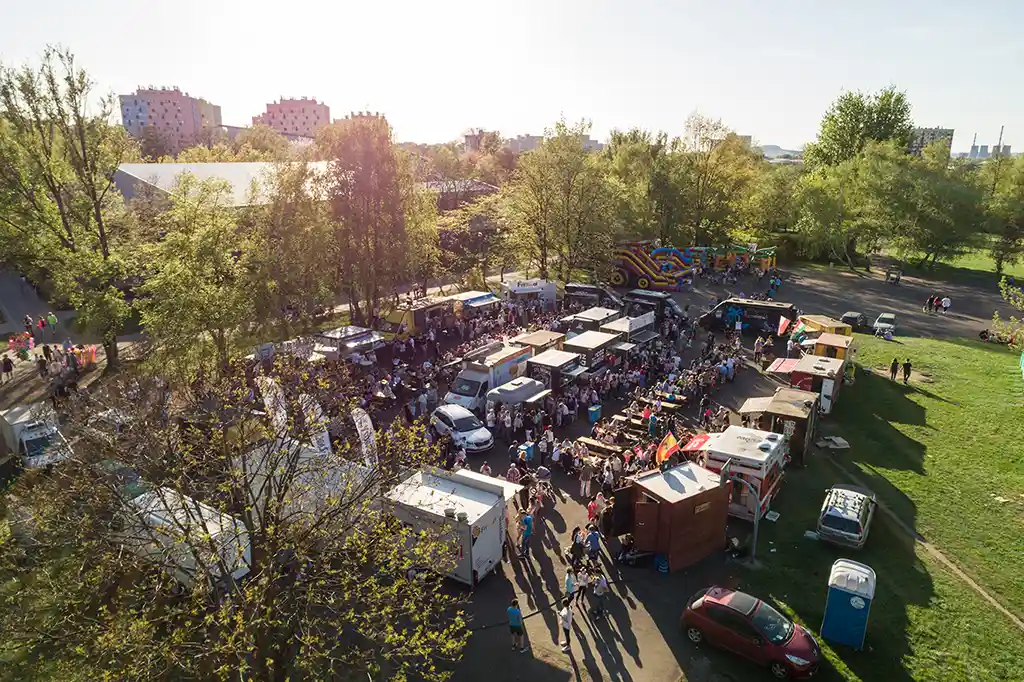
Getting your food truck into a festival is one of the best ways to reach a new customer base and get the word out about your business by taking your menu on the road.
To help increase your chances of success, we’ve created the ultimate food truck festival application guide so you know exactly what to expect. From tips on finding the best festivals to what the heck a COI is (and why you need one), get all your info here and download our checklist for future use!
How to Get Your Food Truck Into a Festival: 5 Key Application Tips
Food Truck Festival Application Timeline
- Find a good fit for your food truck (~10–12 weeks before event date)
- Get necessary permits (~10 weeks before event date)
- Have your proof of insurance ready (~8 weeks before event date)
- Submit application materials (~6–8 weeks before event date)
- Budget for the festival (upon acceptance, or ~1 month before event date)
It takes work to get your food truck accepted in a festival’s lineup, but what exactly does that look like? Read through the five tips below and see what you need to do (and when) to get the festival organizer’s stamp of approval.
1. Find a Good Fit for Your Food Truck
Applying to be a food vendor at a festival takes time and money, so you don’t want to waste energy and funds filling out applications left and right. Instead, focus on finding a festival that would be a solid fit for your truck.
Look for events that:
- Are well-established: This isn’t to say that a brand new event isn’t worth applying to, but events that have taken place for multiple years tend to have dependable turnout
- Have positive reviews from previous attendees: For events that have taken place before, always look for encouraging testimonials and reviews online
- You’ve heard good things about: Talk to other food truck owners and vendors in your network to hear about their experiences at festivals you’re interested in
- Suit your brand or mission: For example, a plant-based food festival is a great vending opportunity for a vegan taco truck
2. Get Necessary Permits
Chances are, you’ve already gotten some permits to legally operate your food truck, but it’s always smart to check and make sure you have the ones festivals typically require.
This can vary depending on your local health department requirements or what the festival organizers mandate, but usually includes:
- Food handler certification: Certifies that your employees have passed an exam on safe food handling practices
- Food manager certification: Similar to a food handler certification; many areas require one certified food manager to be present whenever your business is running
- Health department permit: Issued after your food truck passes a health inspection (also called a food service license)
- Parking permit: May be required for you to park your food truck in certain areas, depending on zoning laws
- Special event permit: Allows you to sell food at a specific location for a set amount of time (also called a vending permit)
3. Have Your Proof of Insurance Ready
Any reputable, well-run festival will require you to provide proof of food festival liability insurance (aka a Certificate of Insurance, or COI) before they accept you as a vendor.
While festivals carry their own insurance, they want participants to be covered in case they’re responsible for an accident. This could look like someone tripping over your generator cord and injuring themselves, or a customer having an allergic reaction after accidental cross-contamination.
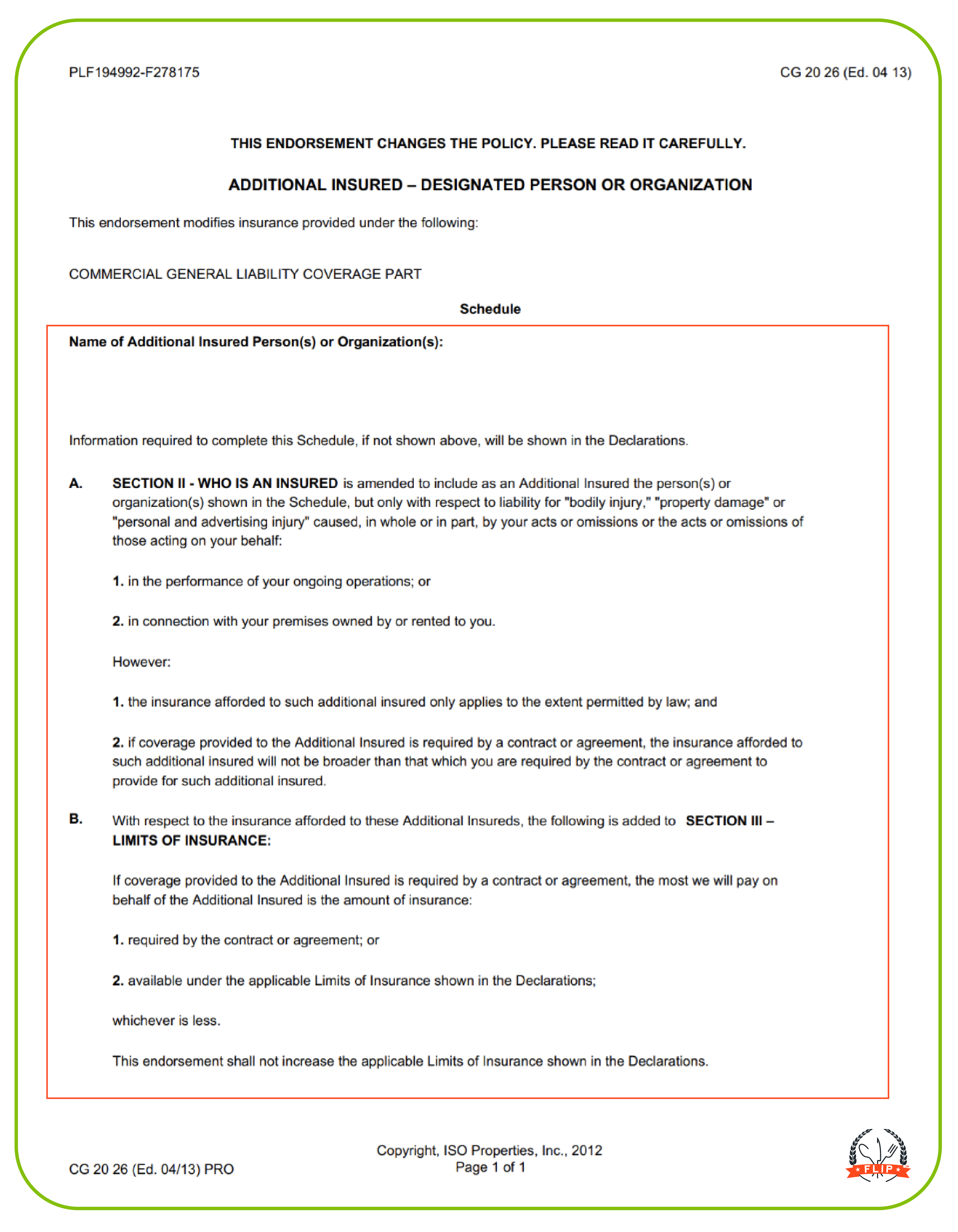
Your COI summarizes your coverage, as well as your policy limits. Festival organizers typically ask you to provide a copy of your COI with the festival listed as an additional insured. This means that if the festival gets sued over a covered event caused by your business, they get protection from your policy, too.
Here’s what an additional insured form looks like on your policy:
4. Understand Application Requirements and Prepare Materials
Festivals usually post their application and a list of required materials on their website, so be sure to read the instructions carefully to avoid missing anything. Submitting an incomplete application could cause delays, leaving you less time to plan logistics before the event, or the festival organizers may reject it outright.
Here’s a quick list of what food truck festivals usually require when applying:
✔️ Fee: Application fees are typically anywhere from $25–$50 and are usually non-refundable (note: this is separate from the vendor fee you pay if your application is accepted)
✔️ Menu: This should list all of the food you plan to serve at the festival, with descriptions of each item
✔️ Photos: Include pictures of your menu items as well as your truck (a rig with an eye-catching wrap and creative branding is more likely to catch the eye of the festival organizers!)
✔️ Pitch: Write a brief description of your business, including your mission statement and what makes you a stellar fit for the festival
✔️ Proof of insurance: Festivals generally require a general liability insurance policy with limits of $1,000,000 per occurrence (maximum amount paid for a single claim) and $2,000,000 aggregate (maximum amount paid for an entire policy period)
5. Budget for Each Festival
Since vending at food truck festivals can be very profitable, it’s easy to overlook the expenses that come along with them. Once you’ve accepted, make sure to budget accordingly so you end up in the black.
Vendor Fees
These fees vary widely depending on the festival’s size and popularity, from $100 for smaller events to $3,000 for larger ones. You may also hear this referred to as the “flat fee” for participating in the festival, as it’s the same for all vendors regardless of their sales.
On the other hand, some festivals require a percentage of your sales instead of a flat fee. They usually disclose this on the application or the vendor info page of their website, but it tends to be between 10% and 20%.
Supplies & Inventory
Vending at a food truck festival means managing higher volumes than you normally would during a non-festival day. Make sure your supplies and inventory can keep up, including your:
- Ingredients
- Fuel for your equipment (e.g., propane)
- Packaging and to-go containers
- Single-use utensils
- Ice
Staffing
Because of higher volumes, you may need to reevaluate your staffing needs for the event. This could mean bringing on extra staff to handle the rush, or paying your current employees overtime if they need to work longer hours.
Travel Logistics
Food truck festivals are an excellent way to bring your business to new locations, but don’t forget to factor in the cost of fuel to get there and back! This is especially important if you’re going to a festival outside your normal operating range.
Why Your Food Truck Festival Application Could Get Rejected (& What to Do Next)
If your food truck festival application is rejected, it’s probably not a reflection of the quality of your food. Instead, it could be that:
- The festival has already met its vendor limit and doesn’t have any spots left
- Organizers don’t want multiple vendors serving the same type of food at their festival and have rules against direct competition
- You applied later in the application period, or didn’t meet the deadline
- You left something out of your application
Don’t let an honest mistake get in the way of your festival opportunities. We created this food truck festival vendor application checklist to help you stay organized and increase your chances of acceptance. Grab your copy today!
FAQs About Food Truck Festivals
How Much Money Can a Food Truck Make at a Festival?
Depending on the size of the festival, food trucks often make between $1,000 and $2,000 vending at an event. Bigger events with more guests tend to be more profitable than smaller ones.
How Much Time Will I Usually Have Between Acceptance and Festival Day?
This varies depending on the festival, but you can generally expect about a month between being accepted and the date of the event.
Should I Include Pictures of My Food Truck and Menu in My Festival Application?
Yes! Most applications require you to submit pictures of your food truck as part of your application materials, along with pictures of the menu items you plan to serve there. Make sure they’re high-quality photos with good lighting, so each item looks as good as it tastes.

Alex Hastings
Alex Hastings is a licensed insurance agent in the state of Washington. Alex leverages her experience as a lover of fast-casual food, baked goods, and iced oat milk lattes. She holds a B.A. in Creative Writing from Western Washington University. Before working at Veracity, she was a retail copywriter at Zulily and an English language teacher in South Korea. Alex is fully trained on FLIP insurance coverages and writes content that connects food and beverage business owners with the policies they need.
Alex Hastings is a licensed insurance agent in the state of Washington. Alex leverages her experience as a lover of fast-casual food, baked goods, and iced oat milk lattes. She holds a B.A. in Creative Writing from Western Washington University. Before working at Veracity, she was a retail copywriter at Zulily and an English language teacher in South Korea. Alex is fully trained on FLIP insurance coverages and writes content that connects food and beverage business owners with the policies they need.

Andrew Adamus
Andrew Adamus is a Program Manager for Food Liability Insurance Program (FLIP). He is an underwriting leader with more than a decade of experience in commercial insurance, holding an MBA from Syracuse University along with AINS, API, AU, and AIS designations. Andrew believes that successful underwriting is built on strong relationships, thoughtful analysis, and a commitment to helping policyholders protect what matters most. His goal is to deliver insurance solutions that support long-term success.
Andrew Adamus is a Program Manager for Food Liability Insurance Program (FLIP). He is an underwriting leader with more than a decade of experience in commercial insurance, holding an MBA from Syracuse University along with AINS, API, AU, and AIS designations. Andrew believes that successful underwriting is built on strong relationships, thoughtful analysis, and a commitment to helping policyholders protect what matters most. His goal is to deliver insurance solutions that support long-term success.